



UPCOMING EVENTS
Grounded Sound Journeys
with Terrie Weaver & Silvy Franco

Kava Sanga begins at 6:45 and the following sound journey lasts until about 9pm.
The Reiki infused journey begins at 7pm and lasts until about 8:15
+++++++++++++
Single Day Classes with Margi Flint
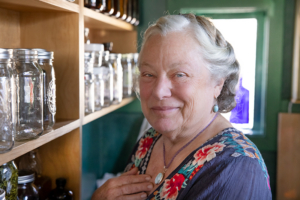
Margi will be visiting the Shepherdstown community for the following dates to offer single day workshops:
Tuesday, December 15- Herbs to stay Juicy inside and out
Sunday, January 10th – How to make an Adult Salary as an Herbalist.
Friday, February 26- Dancing with the Endocrine System (stick around for the Reading the Body intensive with Ashley Davis on February 27 & 28th- see below)
Sunday, March 10- Clinical Skills for the Practicing Herbalist
+++++++++++++
Reading the Body Weekend
with Ashley Davis
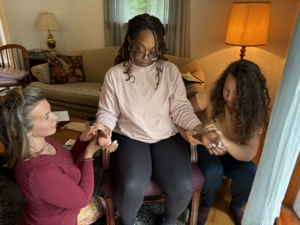
Join us for a weekend exploring the features of the body. We will learn the meanings behind colors, lines, and other markings on the face, tongue and nails as a tool to understand the energetic landscape of the inner terrain. We will have plenty of time for practicing on each other and will finish with drop pulse testing to confirm which herbs would be most beneficial to achieve balance.
Come a day early to attend Dancing with the Endocrine Systemwith Margi Flint (Friday, February 26)
Black Cohosh
/in Herb of the Month /by Ashley DavisMeet Black Cohosh, a native woodland perennial and one of my top ten favorite herbs. You may have heard of this plant as a “menopause herb” and it is a great ally for hormonal transitions, but it has many other virtues including relieving arthritis and rheumatic pain, lower back pain, whiplash, and menstrual cramps!
BOTANICAL NAME: Cimicifuga racemosa, Actaea racemosa
COMMON NAME(S): Black Snake Root, Rattle Root, Squaw Root, Bugbane
FAMILY: Ranunculaceae
PARTS USED: Root and rhizome
DESCRIPTION: Native perennial; non-aggressive, non-invasive. 3-8ft. Leaves thrice-divided; sharply toothed; terminal leaflet 3-lobed, middle lobe largest. Flowers white, in very long spikes; May – Sept. Tufts of stamens are conspicuous
HABITAT/HARVESTING/PROPAGATION: Black Cohosh grows in rich woods. Southern Ontario to Georgia.; West to Arkansas, Missouri and Wisconsin. The roots are unearthed with the rhizome in the Fall after the fruits have ripened. They should be cut lengthwise and dried carefully. Black cohosh is most easily propagated by dividing the rhizomes in spring or fall. Plants can also be started indoors from seed or seed can be directly sown into the ground, but rhizome divisions provide a more uniform plant stand and allow for a faster harvestable root. Black Cohosh is on the endangered species list and is heavily encouraged to propagate!
ENERGETICS AND TASTE: Cool, Sweet, Acrid, Bitter
TISSUE STATE: Wind/Tension, Damp Stagnation
CONSTITUENTS: Triterpene glycosides (actein, cimicifugoside, cimifugine, racemoside, cimiracemosides), isoferulic aice, salicylic acid, volatile oils, tannins (Hoffman)
SOLUBILITY: Water, alcohol (best), glycerine
ACTIONS AND PROPERTIES: Emmenagogue, antispasmodic, anti inflammatory, antirheumatic, alterative, nervine, hypotensive
USES & INDICATIONS: Black Cohosh is a valuable remedy for many systems of the body. A fantastic relaxant and normalizer of the female reproductive system by lowering painful or inducing delayed menstruation, relieves cramping pain during pregnancy or associated with menstruation. It is very effective against rheumatic pain including that of rheumatoid arthritis, osteoarthritis, muscle pain, neurological pain, sciatica, and neuralgia. It is antispasmoic and anti-inflammatory, which make a wonderful combination for rheumatic complaints. It is also alterative, meaning that it supports the channels of elimination and can keep the body’s detoxification mechanisms working optimally. Alteratives used to be called “blood purifiers” because they can keep the blood from becoming too thick or congested.
Black Cohosh helps to ease both physical and mental changes associated with menopause and perimenopause such as hot flashes, headaches, vertigo, irritability, sleep disturbances and depressive moods. The phytoestrogens that black cohosh contains act as estrogen modulators and can be helpful for both estrogen deficiency and excess. Black Cohosh has also been successfully administered in women younger than 40 for treatment of hormonal deficits associated with ovariectomy and hysterectomy (3).
Black Cohosh may lower blood pressure and enhance circulation. It relaxes the smooth muscles of the uterus, digestive tract and blood vessels. It also relaxes It helps to improve dark, gloomy depression and relieves dark, twisted emotional congestion (2). It increases the flow and circulation of Cerebrospinal fluid (CSF). That combined with its antispasmodic effect on the muscles makes black cohosh a specific remedy for whiplash.
Five main uses:
CONTRAINDICATIONS: Pregnancy and lactation, use cautiously. In large doses, it can cause headaches, vomiting, and dizziness. Reports of black cohosh toxicity are due to adulteration of black cohosh with bugbane and other look-alikes. There is also bad information on the internet that warns against using phytoestrogenic herbs like black cohosh in cases of estrogen-dependent cancers because they can increase their growth. This is not true. It has been well-established for decades that phytoestrogens work as both estrogen agonists and antagonists and have a modulating effect on estrogen receptors. In fact, phytoestrogens can help to block the binding of the stronger estrogens like estradiol or xenoestrogens and be very helpful as part of a treatment protocol for breast cancer and other estrogen-dependent cancers.
PREPARATION AND DOSAGE:
Decoction : 1 tsp : 8 fl oz water, decoct 20 minutes, steep 40 minutes. 2-4 oz, 3x a day
Tincture : Fresh root (1:2 80% alcohol), Dried root (1:5 80% alcohol), 1 mL 3x a day
(Fresh root is far superior to dried root)
Glycerite : Dried root (1:5) 0.5-1 mL 3x a day
Capsule : 250-500 mg, 2-3x a day
HOMEOPATHIC/FLOWER ESSENCE: The Homeopathic remedy has an effect on cerebrospinal, muscular system, uterus and ovaries. Indicated in pains associated with rheumatism, uterine cramps and migraine. It helps in treating menstrual disorders accompanied with severe pain in the ovarian region. It is also useful in relieving soreness of the muscles and limbs and helps in reducing involuntary jerking.
The flower essence : Knowing and trusting in one’s inner strength and resources. Helps to promote the honesty and courage to deal with and heal past experiences of abuse and oppression. Releasing entanglements. Bright strong sense of self-emerging.
ETHNOBOTANY/HISTORY/FOLKLORE/
The American Indians have given us ten times as many female remedies as any other culture. Black cohosh was used for menstrual problems and as a parturient in the late stages of labor. The name “cohosh” seems to come from the Algonquin word associated with pregnancy. Rafinesque introduced it to medical literature and it was adopted by the early physio-medical and eclectic physicians. Dr. C.J. Hemple gave it a proving in 1856 and it was adopted into homeopathy.(5) Black Snake Root refers to its past use in North America to treat snake bites, including that of the rattlesnake. Also known as bugbane (in Latin cimicifuga means “to chase insects away”) (4 )
COMBINATIONS:
Black Cohosh, Chaste Tree, Sage, Licorice and Motherwort for relieving hot flashes and night sweats (1)
Black Cohosh and Night Blooming Cereus for “doom and gloom depression”(Our great Eclectics)
Yucca root, Devil’s claw, Black Cohosh root, Prickly Ash Bark, Ginger root, Licorice Root for Good General Arthritis Formula (4)
REFERENCES:
*** This article is for educational purposes only. These statements have not been reviewed by the FDA and this information is not intended to treat, cure or prevent any disease. ***