


UPCOMING EVENTS
Grounded Sound Journeys
with Terrie Weaver & Silvy Franco

October 9th & 16th with Kava
+++++++++++++
Free community film screening: Numen, the Healing Power of Plants
Saturday October 17th
6:00 – 7:00 pm
+++++++++++++
3-Day Immersion: Reading the Body Immersion
with Margi Flint

October 23rd-25th : 10am-4pm
+++++++++++++
Medicine-Making Circles

Fire Cider & Herbal Oxymels
October 24 ~ 1-3:30
Get ready for the turn of the seasons with an immune supporting and warming batch of fire cider with locally harvested herbs, roots and warming spices. We will use locally harvested ingredients and spend some time in collective community crafting as you prepare your own batch of fire cider to have on hand as winter nears.
+++++++++++++
Stardust Market
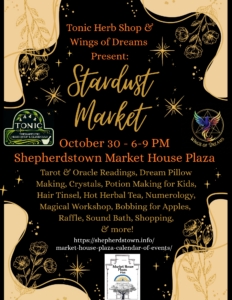
Friday, October 30th
6-9 pm
Market Square downtown Shepherdstown
Join Tonic & On the Wings of Dreams for a magical evening of autumn fun featuring mulled cider, crystal wrapping, dream pillow-making, tarot & oracle card readings, hair tinsel, numerology, bobbing for apples, potion making for kids, sound healing and more!
Alfalfa
/in Herb of the Month /by Ashley DavisAlfalfa comes from the Arabic phrae “al-fac-facah,” which means “father of all foods,” and that is how I was first introduced to this plant. I will always think of alfalfa as one of the greatest nutritive tonics we have.
This time of year, as the sap begins to rise in the trees, so does our blood begin to quicken and move towards the surface. After a winter of being cooped up indoors, eating heavier foods without access to fresh fruits and vegetables, this is the time of year that our ancestors would begin to crave fresh, green, light and alkalinizing foods. Alfalfa infusion offers an answer to this craving. It satisfies our bodies nutritional needs, while gently supporting detoxification so that our blood flows more easily to the surface.
Latin Name: Medicago sativa
Family: Fabiaceae (pea/legume family).
Growing: Alfalfa is a nitrogen-fixer and makes a great cover crop, but with roots that extend up to 60 ft. into the subsoil, alfalfa is persistent. This is why it’s so nutritious. It can accumulate nutrients from very deep in the soil.
Parts Used: aerial parts
Taste: Bland, slightly sweet, astringent & bitter.
Energetics: Cooling, moistening.
Constituents: Vitamins A (carotenes), B1 (Thiamine), B2 (Riboflavin), B3 (Niacin), B5 (Panothenic Acid), B6 (Pyridoxine), B12 (cyanocobalamin), Vitamin C, D, E and K, Calcium, Potassium, Magnesium, Iron, Manganese, Selenium, Zinc, Phosphorous, proteins, Isoflavones (genistein, daidzein), Coumestans (coumestrol), triterpenoid saponins, chlorophyll, organic acids
Actions: Nutritive, Diuretic, Anti-inflammatory, Phytoestrogen
As a nutritive tonic, alfalfa has been used in a variety of chronic degenerative conditions, especially nutritional deficits are involved (i.e. anemia, osteoporosis). It has a long history of being used by pregnant and nursing mothers to strengthen the blood, stimulate lactation and increase the quality of breast milk.
Alfalfa is one of the many legumes that contain phytoestrogenic isoflavones (plant compounds that mimic estrogen). Phytoestrogens can compete with estradial, a stronger estrogen, as well as xeno-estrogens (estrogen-like compounds found in plastics, pesticides, etc.) This produces a protective effect against estrogen-sensitive cancers such as breast cancer. Phytoestrogens are also helpful during menopause, when women experience a decline in endogenous estrogen. Although plant estrogens are smaller and weaker, they do bind with estrogen receptors and can take the edge off of menopausal symptoms.
It can have Its alkalinizing effect on the body helps to calm the nerves & muscles, remove acids from the digestive tract, reducing putrefaction in the gut, and cleansing the internal fluids and tissues. Alfalfa contains fructo-oligosaccharides (pre-biotics) which help to feed the beneficial bacteria in our gut and allow them to outcompete with the “bad” bacteria.
Alfalfa has also been shown to decrease cholesterol and cause regression of atherosclerosis.
It has traditionally been used to relieve water retention, arthritis and peptic ulcers.
Dosage: Infusion: 1 heaping tablespoon per cup of water; Tincture: 30-60 drops in a little water 1-4 times per day (Assuming 1:1 potency). Powdered herb: 5-10 g per day.
Contraindications: Pregnancy– There are mixed reports on this. Some say that plants with coumestans and isoflavones should be avoided during pregnancy and by women and men with fertility problems. These constituents have been shown to decrease fertility in animals who graze on these types of plants. It is thought that the constituent stachydrine has a stimulating effect on the uterus and should be avoided during pregnancy. This perspective, however, is based on a reductionist approach.
No human studies or animal studies on Medicago in pregnancy or lactation have been conducted, but based on the nutritive, food-like nature of the plant, most herbalists consider Medicago to be safe during pregnancy. In fact, alfalfa is an ingredient in the classic NORA tea that midwives recommend for pregnant mothers during the second and third trimesters. And, farmers often increase the amount of alfalfa in the feed of pregnant mares as it is more nutritious than grass hay and believed to benefit livestock. One study found that Medicago feed increased milk yield, lowered fat, and increased milk protein in dairy cows.14
Blood-Thinners: Because alfalfa contains vitamin K, there is a potential of an antagonistic interaction with blood thinning agents.
Lupus: Alfalfa is thought to exacerbate symptoms of lupus, possibly caused by immune system stimulation by L-canavanine. This constituent, however, is based on the ingestion of large amounts of seeds & sprouts. Alfalfa leaves, in tea or tincture form, contain trace amounts of canavanine and are considered to safe when consumed within the recommended dosage15.
Works Consulted:
Dr. Sharol Tilgner (1999): Herbal Medicine From The Heart of The Earth.
David Winston Herbal Therapeutics: Specific Indications for Herbs and Herbal Formulas
Matthew Wood The Earthwise Herbal: A Complete Guide to Old World Medicinal Plants
https://restorativemedicine.org/library/monographs/alfalfa/
https://www.indigo-herbs.co.uk/natural-health-guide/benefits/alfalfa
*This information is for educational purposes only and is not intended to diagnose or treat any disease*