


UPCOMING EVENTS
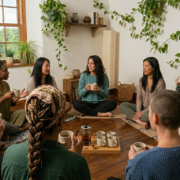
Authentici-Tea Conscious Conversation Circle
Every Thursday @ 7pm
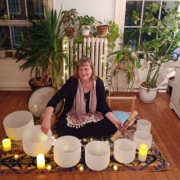
Grounded Sound Journeys
with Terrie Weaver & Silvy Franco
1st & 3rd Fridays; occasional Saturdays
May 1st, 9th, & 15th
+++++++++++++
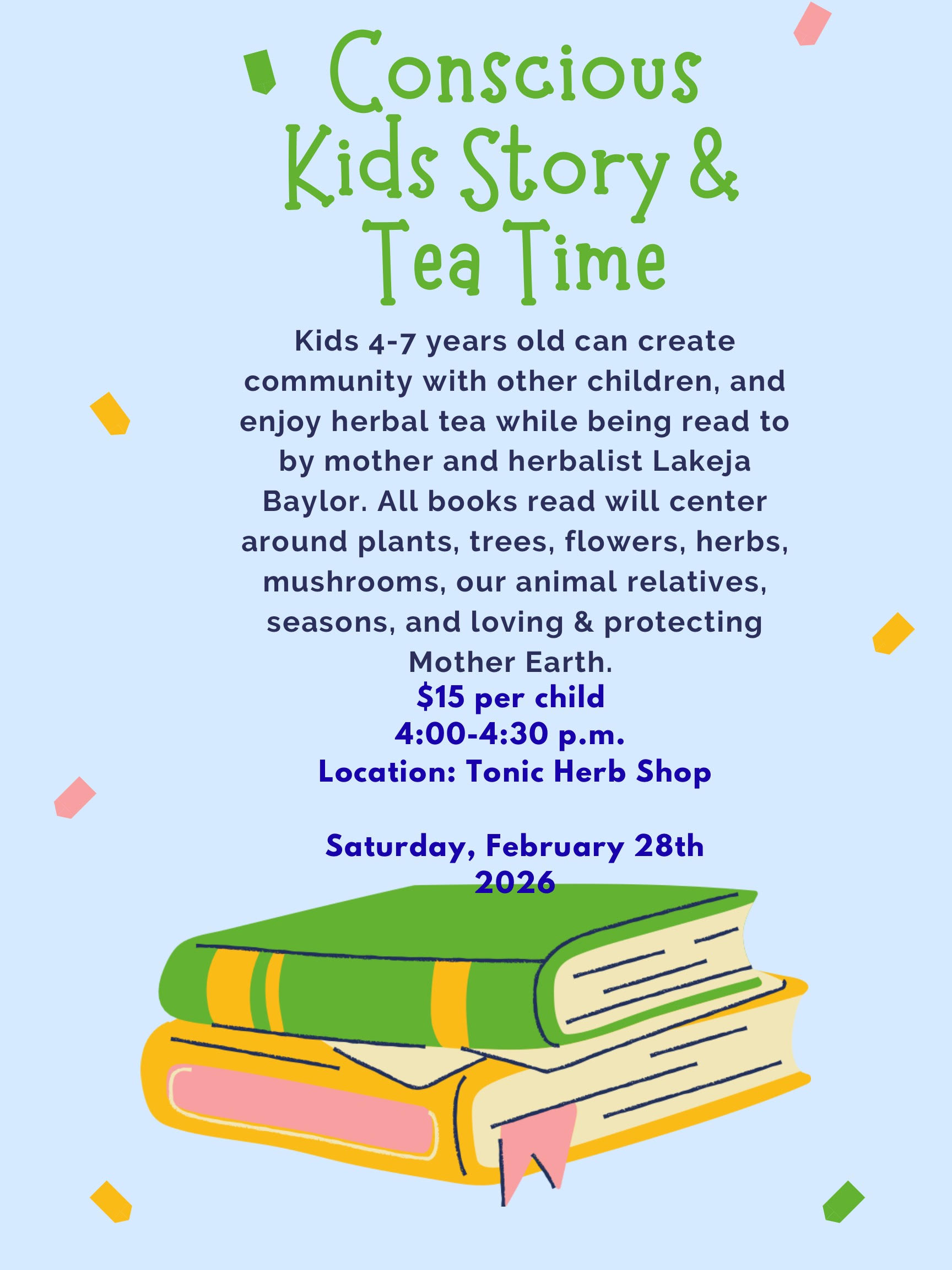
Conscious Kids Story & Tea Time
with Lakeja Baylor
Medicine-Making Circles

May 23 ~ 1-3:30
Herbal Oxymels & Infusions
Let’s get to know Nettle and Milky Oats with all the creative and nourishing possibilities these plants offer. We will meet them and then incorporate them into teas and vinegars, exploring creative ways to receive mineral rich and tasty herbal infusions. You’ll take a nourishing herbal oxymel home with you.
+++++++++++++
Mother’s Day Cacao Ceremony
May 10th, Mother’s Day
9:30-10:30am
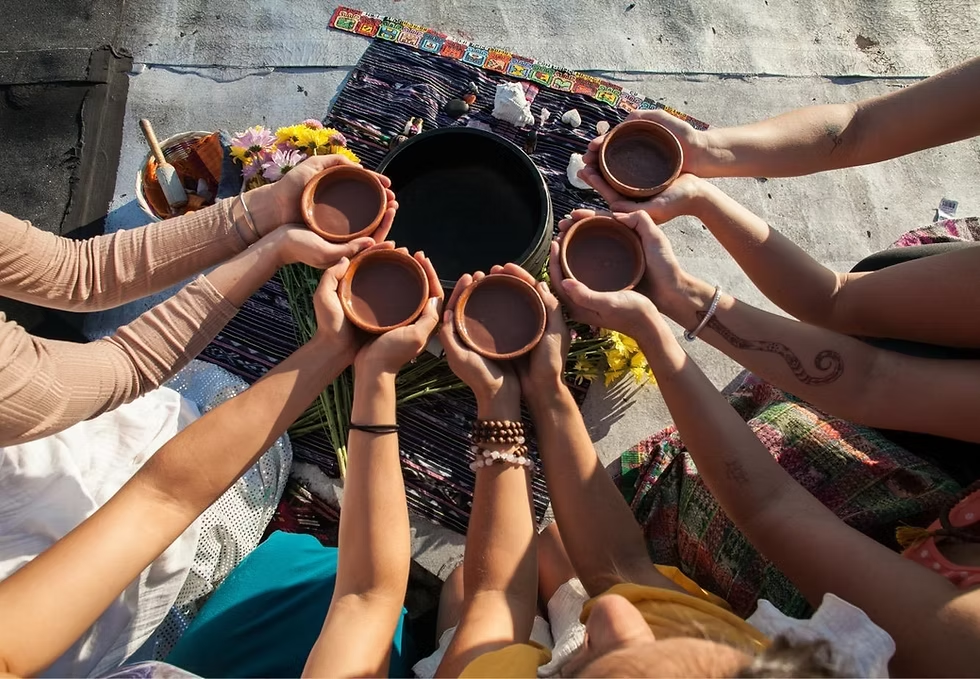
w/ Silvy Franco
Come and begin your Mother’s Day with a guided heart-opening experience. We’ll learn about cacao, where this beautiful sacred plant comes from, how she is prepared for ceremony, and enjoy a cup while being guided back to your heart by the sound of the drum and guided meditation. You will leave feeling uplifted, reconnected to your emotional heart (seat of the soul) and to others.
+++++++++++++
Rooted & Restored: Body, Breath, and Botanicals
with Elizabeth Greer, MA, PMH-C, Ms. Black WV 2026
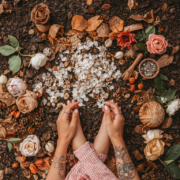
Saturday May 9, 2026
11am – 2:00pm
Join us for a 3-hour workshop that is, at its heart, a love letter to women. We will spend the first part of our time together learning the science of feminine and reproductive/perinatal wellness, the evidence base for somatic bodywork and breathwork, and the brilliant convergence of healing traditions that have supported birthing women since before anyone was writing things down. We will talk about why this knowledge was suppressed, who kept it alive anyway, and why reclaiming it is not nostalgia — it is medicine.
+++++++++++++
3-Day Immersion: Reading the Body Immersion
with Margi Flint

October 23rd-25th : 10am-4pm
Lemon Balm
/in Herb of the Month /by Ashley DavisLemon balm is an uplifting and relaxing nervine and one of several herbs that is a physical embodiment of sunshine. This is why I am choosing to feature Melissa this time of year, because it helps to bring sunny energy into the cold, dark places
BOTANICAL NAME: Melissa officinalis
FAMILY: Lamiaceae
PARTS USED: Leaf
BOTANICAL DESCRIPTION: Perennial mint family plant with bright green, crinkled leaves that have a fragrant lemon-like scent. It grows about two feet tall, with branching stems, oval or heart-shaped slightly toothed leaves held tightly in pairs at each stem joint. The inconspicuous white flowers, sometimes with a yellowish or pinkish tinge, bloom in the leaf axils throughout the summer and its rich nectar is attractive to bees.
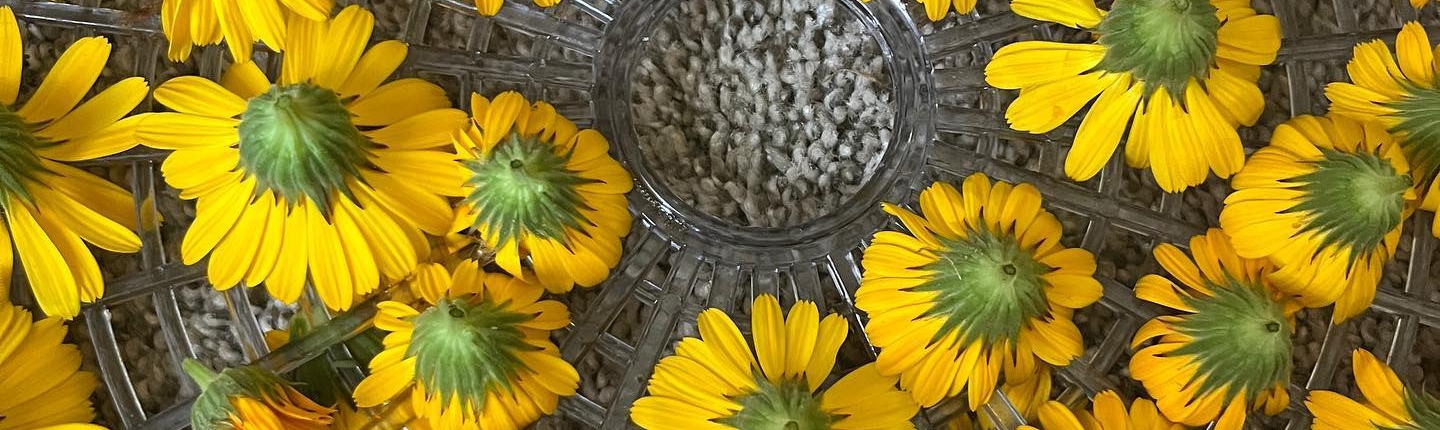
GROWING/HARVESTING/PROCESSING: Lemon balm loves full sun and well-drained soil and can be started from seed sown indoors about 4-6 weeks before last frost, although seeds may be slow to germinate if not stratified. Plants can be placed 16-18” apart when they reach 2-3” tall and grow quickly to form large clumps. They spread somewhat aggressively in optimal growing conditions (as with most mints) and self-seed. Cutting back hard after flowering will produce a fresh flush of leaves. It has few insect or disease problems and is rarely eaten by deer or rabbits. To harvest, cut several inches off top growth of the plats at flowering during the first year. On established plants, 2 or 3 cuttings may be made in a season. The leaves may be used fresh or dried, although dried leaves lose much of their aroma. Spread cuttings on screens in a dark, airy space to dry.
ENERGETICS AND TASTE: Sour, cool, aromatic
CHEMICAL CONSTITUENTS: Volatile oils (0.1-0.2%: neral, geranial, caryophyllene oxide and a broad range of terpenes), flavonoids (glucoside and rhamnazin), polyphenolics (protocatechuic acid, caffeic acid, rosmarinic acid, and tannins), triterpenic acids
ACTIONS AND PROPERTIES: Carminative, relaxing nervine, antispasmodic, antidepressant, anxiolytic, diaphoretic, antimicrobial, antiviral, hepatic
INDICATIONS: Melissa has been in use throughout European history for centuries. It was used as an herb for longevity, memory, fertility, rheumatism, as a sedative and spasmolytic, and to create happiness. Lemon balm is mildly relaxing, cheerful & uplifting. It brings joy to the heart and calms without sedating. Its sunny energy relieves S.A.D. (Seasonal affective disorder) and it can improve mood as well as cognition with as little as one dose in 1 hour. Consider lemon balm for mild mood dips, anxiety, insomnia, nervous indigestion, restlessness, inattention, mental decline, hyperactivity, heart palpitations, atrial fibrillation, high blood pressure associated with nervousness/stress and viral infections.
Hot water extracts have antiviral properties, providing relief for colds/viral respiratory infections and topically counters herpes virus/cold sore lesions, with antiviral activity confirmed in both laboratory and clinical trials. It is a cooling diaphoretic which can help reduce fevers. And the phenolic compounds bind with the viral receptors, blocking the virus from attaching to host cells and replicating. For herpes simplex type 1 and type 2, lemon balm oil can be applied topically in addition to consuming the tea or tincture internally.
Lemon balm’s hormone-regulating effects have been well-documented in the laboratory. Freeze-dried water-based extracts have been shown to inhibit many of the effects of thyroid-stimulating hormone (TSH) on the thyroid gland. In laboratory studies, it interfered with thyroid stimulating hormone binding to plasma membranes and inhibited iodothyronine deiodinase in vitro. It also inhibits the receptor-binding and other biological activity of immunoglobulins in the blood of patients w/ Graves’ disease, a condition that causes hyperthyroidism. So, lemon balm is helpful for hyperactive thyroids, but it is not recommended for hypothyroid conditions, at least not in regular therapeutic doses (note that many of the indications described in the above paragraph such as restlessness, anxiety, hyperactivity and heart palpitations are symptoms of hyperthyroidism).
Find Lemon Balm in our Happy Hour Tea, Lavender-Lemon Tea, Sparkling Mind Tea, Women’s Tonic Tea, and Wise Woman Tea
As a carminative, lemon balm relieves dyspepsia, flatulence, bloating and intestinal cramping. The volatile oils act on the interface between the digestive tract and the nervous system and it has been described by some herbalists as a trophorestorative for the nervous system similar in some ways to milky oats. It is effective for the cramping and spasm of irritable bowel, and gentle enough for gastritis and colicky infants.
CONTRAINDICATIONS: use caution with hypothyroidism due to its antithyrotropic effects (in vitro). This doesn’t mean that people with an underactive thyroid can never consume lemon balm, they just don’t want to consume regular therapeutic doses of it. Some sources say that lemon balm is an emmenagogue and should be avoided by pregnant women, but occasional use of lemon balm in normal amounts is not likely to cause a miscarriage. Nevertheless, it is wise to use caution since we have no human trials to know for sure. Other contraindications include benign prostatic hyperplasia (animal studies show that one of the volatile oil constituents stimulate stromal growth and stimulate estrogen receptors- is this the concentrated monoterpene or the whole plant preparation that was used in these trials?) And lastly, some sources say to avoid during breast feeding because it can have an antiprolactin effect. (13)
PREPARATION & DOSAGE: Soluble in water, alcohol (with glycerin), and oil. In general, long-term therapy is well tolerated.
DRUG INTERACTIONS: Barbiturates: increases the hypnotic effect of pentobarbital and the narcotic effect hexobarbital (animal studies).12
ETHNOBOTANY/HISTORY/FOLKLORE: In Greek mythology, the goddess of magic Hecate gave lemon balm to her daughters. The plant’s genus name, Melissa, comes from the Greek word mélissa or mélitta, which means “bee”. The Greeks also believed that lemon balm, or melissa, could promote long life.In ancient Rome, lemon balm was considered sacred in the temple of the Roman goddess Diana and was associated with the feminine, the moon, and water. In Ephesian culture, which worshiped goddesses and modeled its ceremonial life after the honeybee hive, lemon balm was a sacred herb in the Temple of Artemis because bees favored it. In Medieval times, lemon balm was used as a strewing herb and to reduce stress and anxiety, promote sleep, and improve appetite. It was also used to “transmit messages between lovers” because it represented sympathy, possibly due to its use in relaxing medicines. Elizabethan and London citizens included lemon balm in their tussy musy bouquets to help mask the smells of the street.
REFERENCES:
***These statements have not been evaluated by the FDA. This article is for educational purposes only and is not intended to treat, diagnose, or cure any disease.***