



UPCOMING EVENTS
Authentici-Tea Conscious Conversation Circles
Every Thursday @ 7pm

Join us at Tonic on Thursdays for our weekly gathering for tea & Conscious Conversation. This isn’t your average tea party. Whether we’re discussing herbal alchemy, conscious parenting or exploring the frontiers of telepathy, shamanism, and near-death experiences, ….
+++++++++++++
Grounded Sound Baths
with Terrie Weaver
First & Third Fridays
April 3rd & 20th
6:45 pm
(with optional Cacao Ceremony beforehand at 6:00)
+++++++++++++
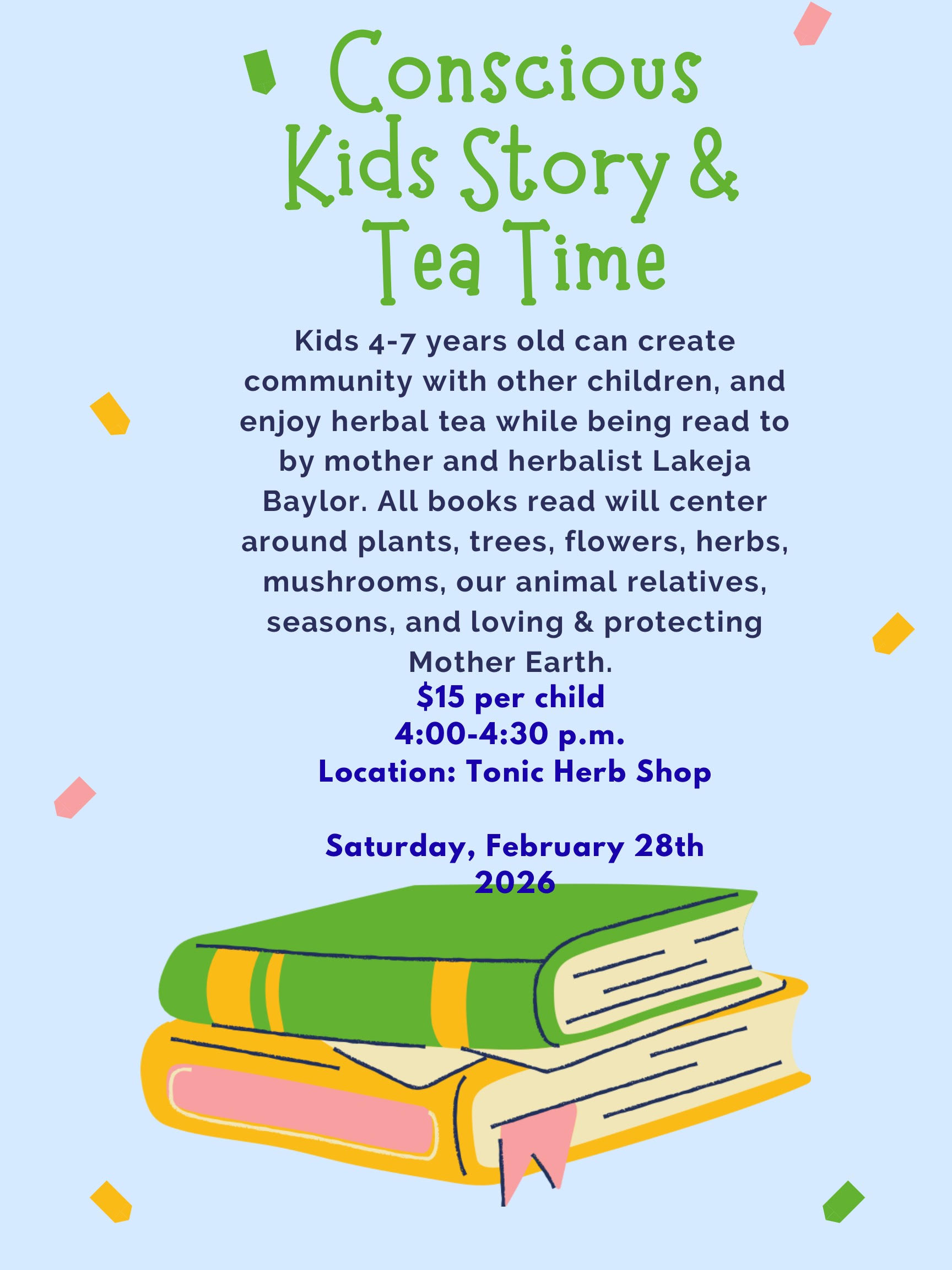
Conscious Kids Story & Tea Time
with Lakeja Baylor
+++++++++++++
Medicine-Making Circles

April 25 ~ 1-3:30
Herbal Uprising!
Meet a new herbal ally and strengthen your relationship with the diversity of wild spring greens, exploring ways they can be infused into food, tea, massage oils and healing balms. Together we will prepare a violet massage oil for your own sweet self care and forage a wild pesto together.
+++++++++++++
3-Day Immersion: Reading the Body Immersion
with Margi Flint

October 23rd-25th : 10am-4pm
++++++++++++
Rose Petal
/in Herb of the Month /by Ashley Davis(Rosa spp.)
Dubbed the “Queen of Flowers,” Rose has been a favored plant throughout human history. It has been cultivated for thousands of years, and has always been associated with love, sensuality and beauty. This materia medica applies to both wild & cultivated roses.
Family: Rosaceae
Names: Rosa centifolia, gallica, and damascena are the most common varieties used medicinally)
Parts Used: Flower & Hip
Energetics: aromatic, slightly bitter, astringent, cooling, drying
Actions: Nervine, carminative (aromatic), emmenagogue, aphrodisiac, antibacterial, antiseptic, nervine, anti-inflammatory, cardio tonic, vulnerary (heals tissue)
Properties: astringent, soothing, calming, uplifting, uplifts spirits, disperses melancholy, eases anxiety & tension, clear heat and toxins, decongestant to female reproductive system, nourishing to the heart & circulatory system.
Indications: as an aphrodisiac, rose teaches us to walk the line between fierceness & vulnerability. It softens our walls and encourages us to be open, while at the same time reinforcing personal boundaries. Rose has a profound opening effect on the heart and is a lovely salve for broken hearts as well as those who have been the victim of violence, sexual abuse or betrayal. Rose teaches self love and helps us to see the inherent beauty in ourselves & our surroundings.
As an astringent, rose petal tea can be used as a gargle for sore throats (especially when combined with rose-infused honey). It dries clear mucus discharges, relieves runny nose, brings down a fever and enhances immunity by clearing heat and toxins. The cooling, astringent petals are also helpful for inflammation in the digestive tract (IBS, infection, leaky gut).
As a cardiovascular tonic, rose can soothe a racing heart and strengthen the blood vessels, improving elasticity, healing microwounds & combating oxidative stress.
Its aromatic and dispersive properties make it useful in uterine congestion manifesting as pain, cramping and heavy periods. Irregular menstruation caused by blood stagnation. And it improves mood and may balance out mood swings associated with PMS (another sign of stagnation). Rose petal tincture is my favorite remedy for menstrual cramps.
And, its cooling, anti-inflammatory properties can be applied to headaches due to stress/high blood pressure with a pounding quality.
External Uses: compress for sore eyes, diluted rose petal-infused vinegar is amazing for sunburns, a liniment of the petals is good for sore muscles, esspecially in Pitta types, and for dislocate discs with swelling. A simple spit poultice is soothing for bug bites & scratches. A salve or paste made of powdered petals is useful for itching rashes and inflamed skin.
Contraindications: Avoid rose oil internally if you have gallstones. Because of its astringent nature, long-term use of rose may exacerbate constipation and dryness.
This information is intended for educational purposes only and is not meant to diagnose, treat, or cure any disease.