St. John’s Wort
St. John’s Wort (Hypericum Perforatum)
St. John’s wort is one of the most well-known and least understood herbs. It is famous as an antidepressant and gets pigeonholed as a one-size fits all solution for melancholy, and while it can be helpful for many people, it has so much more to offer than simply boosting one’s mood. Blooming during summer solstice, St. John’s wort is all about the sun, bringing sunshine into our internal landscape, and also helping to protect and heal our skin from sun damage. At Winter Solstice, the darkest time of the year in the Northern Hemisphere, we both honor the dark and celebrate the return of the sun as we enter the upswing of solar energy for the next six months. Powerful, yet gentle enough for daily long-term use, St. John’s Wort helps to strengthen your internal sun, supporting mood, self confidence, digestion, circulation, detoxification and more.
BOTANICAL NAME: Hypericum perforatum
COMMON NAMES: St. John’s Wort, Amber Touch and Heal, Goatweed, Aaron’s beard, Devil’s Scourge, Rosin Rose, Klamath weed, Millipertuis
FAMILY: Hypericaceae
PARTS USED: Flowering tops
ACTIONS AND PROPERTIES: Anti-depressant, anti-inflammatory, antipyretic, relaxing nervine, analgesic, antispasmodic, expectorant, diuretic, antiseptic, antiviral, vulnerary, cardio tonic, hepatoprotective,
USES & INDICATIONS: Historically, in Medieval Europe, St. John’s Wort was used to exorcise demons. In modern times it’s a well-known antidepressant (are depressive thought-forms any different than demons?). Its bright, solar energy increases the internal flame, which strengthens one’s sense of self, confidence and will power. It brings light to dark places, and a bright internal flame is truly the best protection against negative influences. It is considered a protective herb and can protect against viruses and bacterial infections as well as demons attachments or other people’s bad energy.
As an antiviral, St. John’s Wort has been shown to inhibit enveloped viruses, including Herpes simplex types 1 and 2, HIV-1, influenza, measles, hepatitis A and B, rubella, vesicular stomatitis virus and equine infectious anemia virus (7). The volatile oil and flavonoids in St. John’s Wort possess anti-microbial activity. Major anti-bacterial (especially Gm. Positive) and minor anti-fungal actions have been observed in-vitro (13). Topically, extracts inhibit Staph infection and speed the healing time for wounds, including burns (14).
Infused into oil, St. John’s wort is a wonderful burn remedy including first and second degree burns, sunburn and burns from radiation treatment. In addition to relieving the pain, soothing inflammation and promoting tissue healing, it also heals damage to the nerves. It is a wonderful nerve tonic and is indicated for nerve damage, nerve pain, neuropathy, sciatica and shingles (it’s antiviral + analgesic affect on the nerves makes it a one stop shop for the latter). A nervous system trophorestorative, St. John’s wort restores function to the nerves, including the peripheral and enteric nervous system.
 I think of it primarily as a solar plexus strengthener (supporting our inner sun). It improves digestive function and detoxification. It has a strong influence on the liver, is protective of the liver cells, and stimulates the detoxification pathways in the liver. This is why St. John’s Wort has so many interactions with medications. It speeds the metabolism of anything that is broken down by the CYP450 enzymes in the liver, which includes digoxin, hormonal birth control and many others. For people taking prescription medications, I avoid using St. John’s wort internally, unless using the homeopathic form which has no drug interactions.
Homeopathically St. John’s wort is beneficial for nerve pain, burns and trauma or injury to areas of the body that are rich in nerve tissue. It is indicated for sharp shooting pain, inflammations along the length of the nerve, pinched nerves, and puncture wounds. It also prevents lock jaw and helps reduce pain after surgery. Boericke comments that judicious use of hypericum during surgery can make morphine unnecessary.
As a cardio tonic, St. John’s wort strengthens varicosities, capillary integrity and the elasticity of arteries and veins.
With regard to mood, it does support neurotransmitters, relieves anxiety and tension, relaxes and tones the nervous system and can be helpful for stress, fear, anxiety and mild to moderate depression, particularly in individuals feeling feelings of isolation, lack of community and separation from the rest of the world. It is also very helpful for Seasonal Affective Disorder (S.A.D.) which affects so many people during this dark time of year. While it does not contain vitamin D (vitamin D deficiency is associated with S.A.D.) the solar energy of St. John’s Wort brightens, warms and relaxes. It is great for the winter blues, depression due to chronic anxiety (chronic stress burns out your internal flame), and because it is a pain reliever, St. John’s wort can also be supportive for depression due to chronic pain. It is also regarded as an herb to use where there are menopausal changes triggering irritability and anxiety, but it is known to reduce anxiety or stress during any transition period.
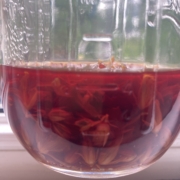 So it protects against infections, relieves burns, aches and nerve pain, cheers you up while calming you down, and strengthens digestion, circulation and detoxification. This is a must-have in your first aid kit and would definitely be my choice herb for being stranded on a deserted island. I would want to have oil and alcohol with me on said deserted island so I could make an infused oil for topical use and a tincture for internal use. Both the infused oil and the tincture should be made with fresh plant, which will burn the oil or alcohol bright red. If your St. John’s wort preparation is not bright red, it is not good medicine.
Bright red from a yellow flower! How magical is that?!
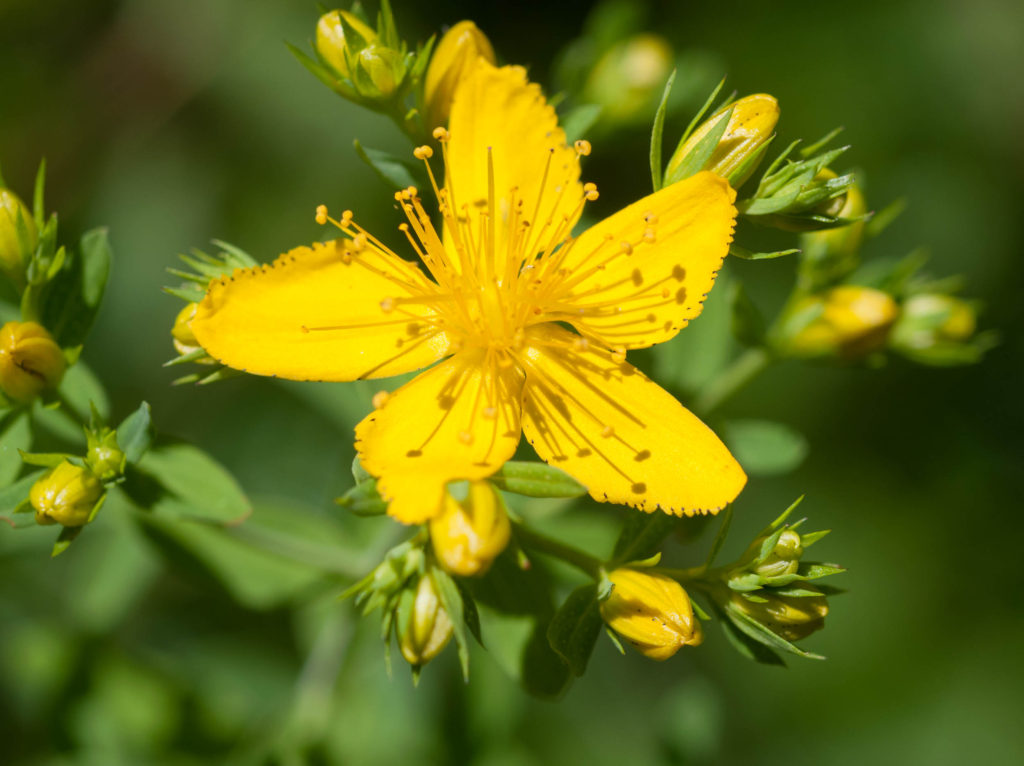
The name St John’s Wort refers to the legend that the red spots on the leaves first appeared on the anniversary of St John’s beheading. The red spots were symbolic of his blood. Early Christians believed that by wearing the flower, or placing it under their head during sleep, St John would appear and give blessings. If you look closely at a fresh leaf or flower, or crush one of them between your fingers, you will see the red coloration from the oil around the margin of the leaves and petals.
PREPARATIONS AND DOSAGE: Soluble in water, alcohol, oil
- Tincture: Fresh plant (1:2, 95% alcohol) 5 drops to 3 ml 3x/day
- Standard Infusion: 4-8 oz 1-4 cups/day
- Capsule: 500-1500 mg, 3-4x/day
- Oil: Fresh flowers (1:4), apply topically
CONTRAINDICATIONS: hypericum should be used with caution during pregnancy due to emmenagogue and abortifacient effects (empirical) and uterine stimulant activity (in vitro, animals). May cause photosensitivity when used internally. Because of its potential as a photosensitive agent, it is advised to use hypericum with caution if one is fair skinned and to use caution with sun exposure when using it. This is speculative and more of a concern with very high doses of hypericin such as 3600 mg standardized extract in a single dose or 1800 mg for 15 days (30). Hypericum is not currently recommended for people with severe depression, at least not as a cure in and of itself. Psychotic symptoms or suicidal risk require professional medical attention. Discontinue use 1 week before surgery (optional) due to potential interactions with anesthetic drugs.
DRUG INTERACTIONS: St. John’s Wort is well known for having a fast transit time in the system so that it will affect other medications taken. In particular, one should not combine with SSRI antidepressants. The following interactions have been documented:
- Anesthetics, general: May cause a hypotensive episode.
- Anticoagulant medications: increases clearance of warfarin and phenprocoumon
- Cyclosporine: Concomitant use decreased plasma concentrations of cyclosporine in a heart transplant patient.
- Digoxin: Hypericum reduced peak concentrations after 10 days concomitant use.
- Ethinylestradiol, desogestrel, oral contraceptive pills: Concomitant use induced breakthrough bleeding due to increased clearance of the synthetic hormones.
- Other drugs that Hypericum should not be combined with include: diltiazem, nifedipine, beta blockers, impipramine, amoxapine, amitriptyline, phenobarbital, phenytoin, cylcophosphsamide, tamoxifen, taxol, etoposide, rapamycin, tacrolimus, citralopram, ftuvoxamine, naratriptan, rizatriptan, sumatriptan, zolmatriptan, opiods, meperidien, sympathomimetics, naloxone, prioxicam, tetracycline (29)
REFERENCES:
- Staffeld B, et al., J. Geriatric Psychiatry Neurology, 1994;7:S47.
- Lininger et al: Healthnotes: Clinical Essentials, Herb Monographs. Prima Publishing, Rocklin, CA. 2001
- Perovic Sand MullerW., Arzneim-Forsch, 1995;45:1145.
- Thiele, Band Brink I, J Geriatric Psychiatry Neurology, 1994;7 (suppl. 1):S60.
- Muller, W., et al., 2nd International Congress on Phytomedicine, Munich, 1996.
- Petty, F. etal., Biological Psychiatry, 1992;32:354.
- Lopez-Bassocchi I, Hudson J, Towers G, Photochem. Photobiol, 1991;54:95..
- Melzer R, Fricke U, Holzl J, Ameim-Forsch, 1991;41:481.
- Ozturk Y, et al., Phytother. Res., U.K. 1992;6:44.
- Demisch L, et al., Pharmacopsychiatry, 1991.
- Couldwell W, et al., Neurosurgery, 1994;35:705.
- Panossian A, etal., Phytomedicine, 1996;3:19.
- Gaind, K., Ganjoo, T., Indian J. Pharm., 1959;21:172.
- Saljic J., Ger. Offen., 1975;2:406.
- Pizzomo, J., et al: The Textbook of Natural Medicine, 2nd ed., Churchill Livingstone, New York, NY. 1999.
- Felter, H. W., Lloyd, J.U. King’s American Dispensatory, 18th ed.. Eclectic Medical Publications. Sandy, OR. 1898
- Linde, K, et al, British Medical Journal, 1996;313:253.
- Mills, S. and Bone, K. Principles and Practice of Phytotherapy. Churchhill Livingstone, New York, NY. 2000.
- Blumenthal, M., The Complete German Commission E Monographs: Therapeutic Guide to Herbal Medicines, First Edition, American Botanical Council. 1998
- Pizzorno, J., et al: The Textbook of Natural Medicine, 2nd ed., Churchill Livingstone, New York, NY. 1999.
- Pizzorno, J., et al: The Textbook of Natural Medicine, 2nd ed., Churchill Livingstone, New York, NY. 1999
- Mills, S. and Bone, K. Principles and Practice of Phytotherapy. Churchhill Livingstone, New York, NY. 2000.
- ESCOP, Monograph St. John’s Wort. European Scientific Cooperative for Phytomedicines. The Netherlands:Meppel;1996.
- Weiss R, Herbal Medicine, Arcanum: Beaconsfield Publ., Ltd., 1988.
- Pizzorno, J., et al: The Textbook of Natural Medicine, 2nd ed., Churchill Livingstone, New York, NY. 1999
- Ibid
- Mills, S. and Bone, K. Principles and Practice of Phytotherapy. Churchhill Livingstone, New York, NY. 2000.
- Pizzorno, J., et al: The Textbook of Natural Medicine, 2nd ed., Churchill Livingstone, New York, NY. 1999
- Brinker, F. Herb Contraindications and Drug Interactions, 3rd ed. Eclectic Medical Publications, Sandy, OR 2001. p179-184
- Brinker, F. Herb Contraindications and Drug Interactions, 3rd ed. Eclectic Medical Publicaticns, Sandy, OR 2001. p179-184
- The Modern Herbal Dispensatory, Thomas Easley & Steven Thorne
- Medical Herbalism, David Hoffman
- The Earthwise Herbal, Matthew Wood
***This information is for educational purposes only and is not intended to diagnose or treat any disease***