

Cleavers
Cleavers is a common ‘weed’ that you will see in the spring. It is sticky and succulent and makes a good-tasting tea that is nourishing and gently detoxifying due to its ability to move the lymph. As a Spring tonic, cleavers is an important herb for cleansing our internal environment and preparing our bodies for the seasonal changes of Spring.
BOTANICAL NAME: Galium aparine
COMMON NAMES: Goose Grass, Cleavers, Bedstraw, Stickyweed
FAMILY: Rubiacaeae
PARTS USED: Aerial parts
 BOTANICAL DESCRIPTION: Each stem is square, has many whorls of 6-8 leaves, and stem and leaves are full of tiny, hooked barbs that make the plant stick (or cleave) to things. There are tiny, white, 4-petaled flowers in the leaf axils that turn into tiny green balls that stick to clothes/fur as a way of dispersing seeds.
GROWING/HARVESTING/PROCESSING: Cleavers is considered both native and invasive to North America. It grows just about anywhere soil has been disturbed: garden beds, trails, sidewalk cracks, etc. Harvest Cleavers in early to mid-Spring when the plant is vibrant and green either before flowering or when the flowers still look fresh. Harvest in clean environments where there is no chance of herbicide or runoff contact. To harvest, grab a bundle with one hand and cut low on the plant with a knife or scissors with the other hand. Like giving the plant a haircut. To propagate, gather stems and leaves that contain seeds and broadcast them in the early Spring. Cleavers self-sows very well.
*Cleavers can be mistaken for Sweet Woodruff, which has a similar appearance. Be sure to correctly identify. One easy differentiation is that sweet woodruff is smooth, not ‘sticky’ like cleavers. *
ENERGETICS AND TASTE: Cooling, drying, moistening, sweet
CHEMICAL CONSTITUENTS: Plant acids (caffeic, p-coumaric, gallic, p-hydroxybenzoic, salicylic, citric), coumarins, iridoids (asperuloside, rubichloric acid), tannins, polyphenols (1)
ACTIONS AND PROPERTIES: Diuretic, alterative, anti-inflammatory, kidney tonic, lymphatic, astringent, demulcent, nutritive
INDICATIONS: Cleavers is most commonly thought of a lymphagogue (an herb that helps to move the lymphatic fluid). It increases lymphatic drainage, breaks up lymphatic congestion- especially in the pelvis-, and in general is a lymphatic tonic. Lymphatic herbs are helpful for supporting natural detoxification and immune function. This can be especially important in the spring, following the sedentary and heavy habits of winter. It can also be helpful following an infection like the flu to help clear out any debris or lingering stagnation. Lymphagogues support lymphatic drainage and are indicated by swollen lymph nodes. Other lymphagogues include calendula, burdock, red root, red clover, echinacea, violet and chickweed. Each has its own unique taste, energetics and affinities.
Cleavers has an affinity for the pelvis & urinary tract. Its mild but effective effects on the genito-urinary tract and lymphatic system make it useful for painful or burning urination, oxalic acid stones in bladder, suppression of urine, cystitis, benign prostatic hyperplasia, prostatitis, epididymitis, urethritis and interstitial cystitis. Cleavers is a non-irritating diuretic used for irritation and inflammation of the bladder, urethra, vas deferens and spermatic cord. It is soothing and relaxing to irritation.
Cleavers can work through calcifications, concretions and fibrocytes out of muscle, lymph and kidneys. Nodular growth or deposits in the skin or mucous membranes are regarded as indications for its use (3). King also noted that Cleavers had been found useful in many skin disorders, such as psoriasis, eczema, lichen, cancer, and scrofula, and is more particularly useful in these diseases when they are combined with a constitutional weakness. Lymphatics in general can be supportive of skin health due to their detoxifying nature.
Cleavers works partly by increase capillary permeability to facilitate the removal of excess fluid and proteins from tissues. It also stimulates macrophages to increase the breakdown of proteins in the interstitial fluid, which thins the lymph and enhances lymphatic flow. This is helpful for things like lymphedema, fluid retention, and cellulitis. It can be helpful for mastitis, although I prefer violet here because violet has more of an affinity for the breasts. Cleavers and violet could be used in combination for mastitis or fibrocystic breasts.
Herbalist Matthew Wood uses cleavers for the nerves and has noted many neurological successes, considering it beneficial for nervousness, sympathetic excess) and inflammation of the nerve endings (neurofibrositis) and indicates it for oversensitivity of the nerve endings, tickling and itchy skin, as a specific for Dupuytren’s contracture and Morton’s neuroma, when the tendons tighten up under the middle fingers or toes. Cleavers is not a nervine, but it is helpful for Vata constitutions or people who are thin or undernourished, or nervous. It is also appropriate for states of excess Kapha marked by stagnation, excessive mucus production, sluggish metabolic function and water retention. It would be tridoshic according to to Ayurveda.
Cleavers can be used externally as a poultice for skin inflammation and swollen lymph nodes and has a cooling effect on the tissues.
CONTRAINDICATIONS: None cited. It is gentle enough for young children.
PREPARATION AND DOSAGE: Water, alcohol soluble.
Cleavers is sweet-tasting and makes a delicious tea. Tea is my preferred way of using cleavers.
- Infusion: 1 tsp: 8 oz hot water, cover and steep 15-20 minutes, drink 4-8 oz, 3x a day
- Tincture: Fresh herb (1:2, 95% alcohol; 5-10 mL, 3x a day
- Fresh Plant Juice: 2-5 mL up to 3x a day
DRUG INTERACTIONS: No side effects or drug interactions have been reported. It is a mild diuretic so using cleavers concurrently with prescription diuretics could be dehydrating so use with caution here.
COMBINATIONS:
- Cleavers and Horse Chestnut for lymphedema
- Cleavers and Calendula or Nettle leaf for lymph tonic
- Cleavers + Marshmallow Root + Cornsilk + Uva Ursi for a chronic UTI or interstitial cystitis
HOMEOPATHIC USE: Cleavers acts on the urinary organs, is a diuretic and is of use in edema, and urinary gravel, painful urination and cystitis. It has the power of suspending or modifying cancerous action. Has clinical confirmation of its use in cancerous ulcers and nodulated tumors of the tongue, chronic skin affections and scurvy. Favors healthy granulations on ulcerated surfaces.
FLOWER ESSENCE USE: Cleavers flower essence supports attachment and appropriate bonding, keeping relationships flowing and love strong.
ETHNOBOTANY/HISTORY/FOLKLORE: Both the Greeks and Swedes (as told by Dioscorides and Linnaeus, respectively) fashioned sieves out of the stems of Cleavers, as a filter to strain milk (Grieves). Grieves reports that this use is still employed in Sweden today. Cleavers were used as mattress fillings which gave it the name bedstraw. It is considered “deer medicine” in Native American medicinal tradition because deer prefer to sleep in patches of cleavers in the springtime and doe will sometimes have fawns in patches of cleavers. This is not only for it’s lush, billowy growth, which makes a fine bed – but also for it’s scent, which disguises theirs as they hide from predators. Deer medicine corresponds to medicine for the nerves (deer are nervous creatures). It is stated that at least one Native American tribe incorporated it into love medicine as a bath infusion for women who desired successful romance. A red dye may have been obtained from a decoction of the root.
DOCTRINE OF SIGNATURES: Matthew Wood highlights a doctrine of signatures indicated by Tis Mal Crow in which the long, slender stems with little seed heads on the end resemble nerves with their terminal nerve bulbs that look a lot like the swellings on the skin caused by neurofibromatosis (characterized by the growth of tumors (usually benign) on nerve tissue throughout the body, affecting skin, hearing, and balance)
REFERENCES:
-
- PDR for Herbal Medicines. Medical Economics Company Inc., Montvale, NJ. 2001
- Lininger et al: Healthnotes: Clinical Essentials, Herb Monographs. Prima Publishing, Rocklin, CA. 2001
- Felter, H. W., Lloyd, J.U. King’s American Dispensatory, 18th ed.. Eclectic Medical Publications. Sandy, OR. 1898
- Cook, WM. The Physio-Medical Dispensatory: a Treatise on Therapeutics, Materia Medica and Pharmacy. Eclectic Medical Publications, Sandy, OR 1985
- A Modern Herbal, Maude Grieves
- The Modern Herbal Dispensary, Thomas Easley
- Herbal Monograph, David Winston
- Herbal Therapeutics, David Winston
- Southeast Medicinal Plants, Corey Pine Shane
- Earthwise Herbal, Matthew Wood
- New Manual of Homeopathic Materia Medica with Repertory, William Boericke

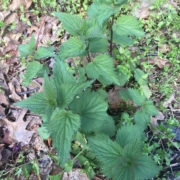 Stinging Nettle (Urtica dioica)