CINNAMON: The Star of the Season
When I think of cinnamon, I think about how much I added to my oatmeal when I was just a kiddo. I was heavy handed in the joy of shaking this yummy spice into my oats. The circumference of the bowl had to be covered in a thick layer. First, it was a warm red hue, and then, upon contact… landing and absorbing the moisture, it turned a rich hue of raw umber, creating a dense covering. Then I knew it was ready. Now, that isn’t to mention that sugar was also involved in that yummy sprinkle and truthfully, I needed to be monitored in my enthusiasm… but this is where my life long love of cinnamon was born. It’s now well known that this spice isn’t just comforting and yummy- it’s medicinal.
The best is yet to come. For the purposes of this article, I’m nominating cinnamon as the Best in Show for the 2026 holiday season. The #1 spice—a hands-down winner! Nothing would be the same without that hint or full bodied embrace of Cinnamon!
Cinnamon has captivated our hearts, tastebuds and minds for centuries. is a long narrative woven throughout the history of the
spice trade, impacting cultures around the world. Rich with legends, tall tales of giants, and ritual, cinnamon has graced the lives of people across the globe for centuries. I couldn’t think of a better nominee for the #1 spice. Maybe that’s silly, and I hope so, as we can all use some fluff and lightness amidst the confusion and dense parts of reality. Let Cinnamon be your guide. For thousands of years, adventures and myths have held many humans captive in the glance of cinnamon. As a matter of fact, the original tradespeople hid cinnamon’s origin, Sri Lanka, so that they could corner the market. It was said that it only existed in the nests of giant birds and it was death defying to harvest. It wasn’t until the early 1500’s that the true source of it was revealed. Fast-forward to modern universities and government-funded scientific laboratories, where cinnamon continues to inspire human invention and awareness. Whether in the embalming practices of ancient Egyptian civilizations, in university laboratories studying anticancer properties, or now in our kitchens as modern enthusiasts—my preferred term being kitchen witches—we are on the edge of inspired invention at every turn. I have great reverence for the legendary presence of this healing spice. We are shaping up, balancing, and fortifying our bodies and souls, with cinnamon available to us daily at breakfast, lunch, and dinner. Also, let’s not forget that it is an ally in the creation of beverages, beauty products, and cleaning products, and can be used as a natural pesticide or animal deterrent in the garden.
Whether you are adding cinnamon to your coffee, baking a pumpkin pie, or giving your cocoa a little something special, you are embarking on a special and satisfying moment of being with cinnamon. I’m certain you’ve loved this spice as an ingredient in both savory and sweet dishes. And now we can embark on the next stage of our journey with this beloved culinary spice. We shall experience the grace of incense making and the mulling aromas of a stove top potpourri and then share some of my favorite tips and favorite recipes to add that little extra flare to your holiday gatherings. These are some of the delights of the season that I look forward to the most. It’s lovely and helps warm the house in the most inviting way. Let’s begin with a stovetop potpourri, which is the easiest and most instantly gratifying way to offer a hug to your home.
Stovetop Potpourri
In a small pot, add slices of orange or lemon, some cinnamon sticks, pinecones, perhaps a clove bud or two, and star anise. Fill with water and bring almost to a boil. Then turn down the heat to a very low simmer and enjoy the aroma as it permeates the entire house. The warmth and moisture are appreciated, especially as we start cranking the heat for the season. Your skin will thank you, and so will your house plants. Maybe this is already a favorite in your household, and really, it never gets old. Its a refreshing way to be at home in a cozy way. I sometimes add a drop or two of essential oil—frankincense or eucalyptus will do just fine. I’d also like to say a word of caution that we need to have awareness around pets as some essential oils like citrus and eucalyptus aren’t the best oil for temple cats and you should practice caution regarding citrus and your temple cat. Please follow your own lead regarding what’s best for your household. Your decisions are respected and are indeed your own.
Next is a simple little tip that adds something extra special to the flavor of your baking. When making a cake or sweet bread, if you have to grease and flour a pan to create a nonstick surface, use cinnamon instead of flour. This adds a really nice dimension to your chocolate cake and it works for so many recipes. And though slightly off-topic, if you don’t already add a bit of instant espresso to your chocolate cake, give that a whirl, too. A bit of complexity that makes the chocolate pop. It’s subtle, earthy, and full bodied at the same time. A nice grounding down into the flavor. Ok, back onto the discoveries of cinnamon.
Or perhaps you’d enjoy a deeper dive into the art and experience of incense crafting. This recipe is a simplified version and is a wonderful incense that anyone can make. This offers a great opportunity to enjoy the season and fill the home with the ancient secrets of purification and protection offered to us by cinnamon’s passionate grace . It’s a sensual project that can take about an hour,give or take, to mix up and form your cones/logs. It’s a fairly easy and fun hands-on project that offers an invitation into the sacred through your intention and prayer. This is as simple or complex as you want it to be. The basic recipe is ground cinnamon, makko powder, water, and a little bit of vanilla bean paste. You can also add other aromatics such as powdered lavender, sassafras, cloves, or lemongrass. Try it out with the recipe below, and if you enjoy the process, perhaps we will meet again to create more in the new year.
Cinnamon Incense
Ingredients:
- 2 Tbsps makko powder
- 2 Tbsps cinnamon (or a blend of aromatic herbs/spices)
- ¼ tsp vanilla bean paste
- And some water to hydrate.
- A small twig – use a thin lavender or rosemary stem. Anything nontoxic from outside will do. Hardwood twig is good too.
Additional considerations:
- Coffee grinder for dry ingredients
- Mortar and pestle
- Floral Hydrosol
- Intention water
- Red Sandalwood powder
- Binding agents – cinnamon is mucilaginous and will hold the dough for this incense.
- Organic bamboo splits
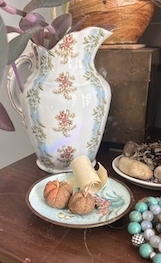 Directions: In a bowl combine measured dry ingredients. Add the vanilla bean paste to about 1 tablespoon of water, and then use it to hydrate the mixture. I like to use a wooden spoon or silicone spatula to begin the process and then check the texture periodically until the mixture forms a soft, pliable dough similar in consistency to play dough. Please note that you do not want your dough to be too watery. It’s best to add the liquid cautiously, as there is a narrow window in which the dough reaches the proper consistency, and it’s easy to add too much. Better to have it a bit thick than too runny. If it’s too wet, it will not hold its shape, will take longer to dry, and will be more susceptible to mold. This is, after all, a moist organic material. After you form the dough, separate it into some lumps somewhere between the size of a chocolate truffle and a medium sized marble and roll little balls. Then take a small stick about the size of a toothpick and press lines into the dough, running from the bottom up to the top and back down the other side. Please see the picture for reference. We are going for a pumpkin shape, so make six to eight indentations to create the ridges of the pumpkin. Then take a bit of twig and insert it into the top center to create a wee incense pumpkin. They are delightfully cute and after you place the twigs you can set them aside on a plate lined with a paper towel to dry for about 3 days to 1 weeks. Keep them in a well-ventilated area, and if you have a fan to circulate the air, even better. You do not want to cover them up or put them anywhere that they could grow mold which is actually pretty easy to do. Once these are dry, they should be easy to light and should burn all the way through. If you run into trouble, you can use an incense charcoal disc. Please be careful when handling combustible items and use heat safe instruments as this is a burning incense and can ignite a fire. Safety first. Additionally, if you prefer you can use a cone shape or log shape if so inclined. Try to keep the thickness as even as possible, and avoid making the shapes too thick. The thicker the dough, the longer it will take to dry and the greater the risk of mold. Happy pumpkin making!
I hope you try it out. My love of creating incense has taken me on a journey over the past 13 years! I have tried to offer you a simplified form that you can make at home. There are many considerations when making incense, but what I’m offering here is the “keep it simple, sweetie” method. I hope it stokes the creative fires for you! If you enjoy this process and are interested in learning more, I will be offering a series of in-person incense-making classes in 2027, so keep an eye out for these offerings in the new year.
Onward we go into our celebrations and continue to flow into some beverage suggestions for your gathering. Next to consider are two of my favorite choices for you and your family to indulge in. First is a non alcoholic Cranberry Sangria and the other is an ACV Cinnamon Metabolic Reset Syrup also known as an Oxymel. Both hold high honors and add to the joy of the gathering. Please note both need some lead time to infuse before serving.
Fall Harvest Sangria
Ingredients:
- 4 cups of cranberry juice
- 2 cups of pomegranate juice
- 2 cups of apple cider
- 1 orange thinly sliced
- 1 lemon thinly sliced
- 1 lime thinly sliced
- 1 green apple thinly sliced
- Half a cup of fresh cranberries sliced
- Half a cup of pomegranate seeds
- Two cinnamon sticks
- sparkling water to taste
- Optional rosemary sprigs for garnish.
- Play with the ratios, use what you have and add what you want! Have fun with it.
Directions: In a large jar or pitcher, layer the fruit slices (You can be as artful as you care to be or simply toss everything in there. The flavor will be amazing no matter how you proceed). Combine cranberry juice , pomegranate juice, and apple cider together and pour over the fruit slices. Add fresh sliced cranberries, pomegranate seeds, and cinnamon sticks to the sangria. Allow the punch to rest in the refrigerator for at least one to two hours before serving, or let it rest overnight for an even better flavor. The beverage can be enjoyed as is, served over ice, or combined with sparkling water to create a bubbly beverage. It can also be mixed 50/50 with red wine for a more traditional sangria or even served with rum to really take it up a couple of notches. However it flows into cups at your gathering, I’m certain you will greatly enjoy this delicious harvest sangria. This recipe is for 8-12 servings depending on how you decide to serve the beverage.
Enhance your digestive fires and your metabolism with a yummy
Cinnamon Ginger Turmeric oxymel
Ingredients & Directions:
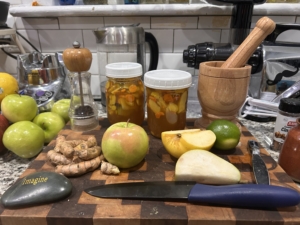 In a 16oz jar combine 2 or 3 cinnamon sticks, about a 2-3 inch thumb of ginger sliced or diced, a 1 inch thumb of turmeric sliced or diced. A couple scratches of pepper from the mill or a couple of cracked peppercorns will do just fine. Fill the remainder of the jar with a 50/50 combination of ACV (apple cider vinegar) and fresh raw honey of your choosing. And that’s it. Feel free to embellish this base recipe with other amazing finds from your pantry, garden, or grocery. Some suggestions include lemon or orange slices (or just the peel), cloves, fennel seeds, licorice root, and elderberries. For the brave among us, some spruce or pine needles can also be a lovely addition. (PSA: please only harvest and add pine or spruce if you know who or what you are harvesting. Yew is always toxic and never ok to eat – please correctly identify your plants before creating tonics. Thank you) Typically you will want this combination to rest for 2 to 4 weeks before dipping into the pot. Though, as a rogue kitchen witch, I say use your pestle to crush the ingredients and dip in early if you haven’t got the weeks to fully commit before Thanksgiving dinner. No attachment here—the syrup will only improve as it ages. This syrup can be a nice digestive aid to offer between courses or in preparation for the feast. Enjoy this as is by the spoonful, use it to create a lovely vinaigrette for salad, add it to sparkling water for a room-temperature beverage, or add it to hot water to enjoy as a tea. I’m certain it will pair nicely with green tea if caffeine is desired. Have fun with it! It’s your holiday to play with your yummy creations.
I truly believe that the sky is the limit regarding cinnamon. It brings so much to everything it encounters, and I believe it deserves to be the toast of the season, bringing cheer to your holidays and warmth throughout the fall and winter. Cinnamon is the star of the show and she deserves a place on the altar of the hearth we call home. Enjoy your cinnamon, and happy holy days to everyone!
No, wait! My very last thought for you: if you haven’t sat down and enjoyed a single-herb tea of cinnamon, please do so. Find yourself some chipped cinnamon, scoop one or two teaspoons into your cup, and steep with freshly boiled water. The flavor is so wonderful and I may be repetitive with my message here but it’s like having a hug. I had the pleasure of this experience for the first time this year, and it made me wonder why I had not done this before. Let this spice speak for itself, enjoy that cup of ancient, sacred beauty, and know that you are at the center of all space-time innovation when you do! Escape into the faraway energy that enticed people to embark on the wildest adventures, discover the most sacred forms of service, and embrace the profound experience of being human—all by taking a sip of this wisdom spice.
Many thanks and take care. – Nicole
Common Names: cinnamon, cinnamon bark, Ceylon cinnamon, cassia cinnamon
Latin Names: Cinnamomum verum (also known as Cinnamomum zeylanicum and Laurus cinnamomum), Cinnamomum aromaticum (also known as Cinnamomum cassia)
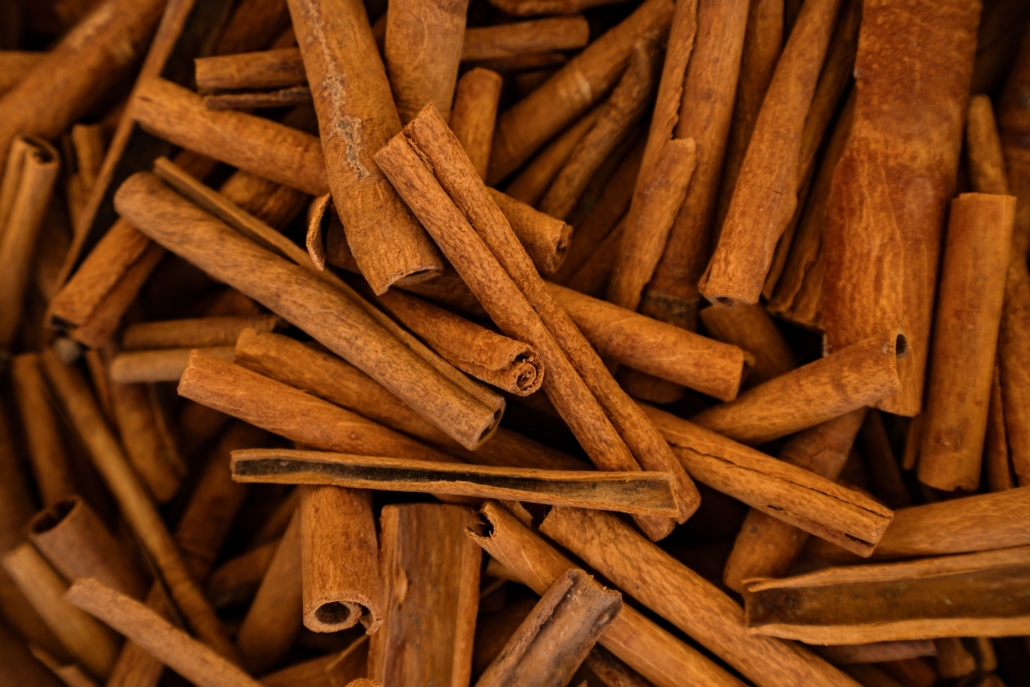
There are four commonly sold types of cinnamon. Three are varieties of cassia, and the fourth is Ceylon cinnamon, known as “true” cinnamon (Cinnamomum verum).
Cassia is not a single plant:
- Chinese cassia (Cinnamomum cassia) is the classic dark, strong cinnamon.
- Indonesian cassia (Cinnamomum burmannii), also sold as Korintje, is the everyday supermarket type.
- Saigon cinnamon (Cinnamomum loureiroi) comes from Vietnam and is known for a particularly intense flavor.
The Ayurvedic Perspective on Cinnamon
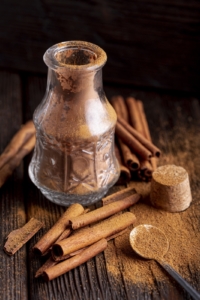 Cinnamon is considered tridoshic, meaning it can support all three Ayurvedic doshas. If you’d like to learn more about the doshas, I encourage you to visit the Banyan Botanicals website.
According to Starwest Botanicals :“Ancient Ayurvedic wisdom classifies cinnamon as heating, with additional rough, sharp, and light qualities that may help penetrate through stagnation to evoke more flow or create a sense of stimulation when the body needs it most. These qualities speak to why cinnamon is commonly found in natural remedies for seasonal wellness and congestion. This antioxidant rich herb is said to warm the lungs and kidneys, while liquifying mucus.
Ayurveda tells us that cinnamon has a natural inclination to remove excess coldness and dampness from the head and chest. Sip it as a tea with ginger and honey this season to activate fall and winter wellness. Cinnamon, like ginger, is believed to be universally beneficial for a range of ailments and discomforts — especially those that are more likely to turn up in colder months.” And that’s just the beginning. This powerhouse has the potential to assist circulation, and digestion. Its phytochemical constituents, including flavonoids, promote vasodilation and support circulation. This spice also helps ignite the digestive fires and, from an Ayurvedic perspective, is believed to strengthen digestion and assist in burning up toxins.
It is also believed to aid in the absorption of nutrients, especially when paired with bay and cardamom. You will commonly find these aromatic spices working together in things like garam masala and chai tea.
Some additional food for thought: interesting findings are emerging from research exploring cinnamon’s potential effects on cognitive function. The study aimed to systematically review the effects of cinnamon and its key components on memory and learning. The majority of the studies reviewed suggested that cinnamon and its constituents may have beneficial effects on cognitive function. Cinnamon shows promising prospects towards addressing Alzheimer’s disease, slows the progression of Parkinson’s disease, improves insulin sensitivity in the brain, and may lower liver fats connected to obesity. There is certainly more research to be undertaken and more to be revealed in the coming years. It’s possible that Eastern medical practitioners have known what a potent ally cinnamon is for quite some time. That said, there is a real rabbit hole of information about cinnamon available through the NIH website, and I encourage you to explore it. Know that learning is never static, and there is always more to be uncovered. Cognitive vitality is a very hot topic of conversation these days, and preclinical studies suggest that cinnamon may have beneficial effects on brain health. Wow! This research has potentially significant implications for memory and focus, particularly regarding the role of the hippocampus in processing information. It really is fascinating, and I personally look forward to learning more as additional research findings are revealed.
I appreciate this message shared in the Psychology Today article ‘Why Cinnamon Is Good for Your Aging Brain’: “Eating cinnamon induces significant increases in the levels of a variety of chemicals in the brain called neurotrophic factors. These factors stimulate the birth of new neurons in the brain and encourage the survival of existing neurons. These two processes are critical for the maintenance of a healthy brain. During the past decade many scientific studies have discovered that these neurotrophic factors can prevent, or greatly slow the progression of, a variety of degenerative diseases.”
Contraindications
- Cinnamon may interact with blood thinners, blood pressure medications, diabetes drugs, and medications metabolized by the liver. Ceylon cinnamon may contain trace amounts of coumarin and is generally considered safe in culinary amount. Typical culinary consumption of cassia cinnamon does not usually expose people to enough coumarin to cause significant problems.
References:
https://www.microingredients.com/blogs/microingredients-updated/ceylon-vs-cassia-cinnamon
https://www.starwest-botanicals.com/blog/-the-ayurvedic-benefits-of-cinnamon-starwest-botanicals/?srsltid=AYCX9vJNG7uQh1NrNQrsbE6xgsAmFSoSn6nKgPrbxRIRpvj6yjuy5_DQ
https://www.banyanbotanicals.com/pages/ayurvedic-tridoshic?srsltid=AYCX9vIgKsZJa8aDqctizCNxJ-tDO56AG_6or69uaIbUDamfqfW9NC3u
https://pubmed.ncbi.nlm.nih.gov/36652384/https://www.psychologytoday.com/us/blog/your-brain-on-food/201306/why-cinnamon-is-good-for-your-aging-brain