
Herbs for Stress & Overwhelm
We asked our social media followers what they would like to see more of, and the answer we received was: more on how to support the nervous system. So here is an article with differentials on some of my favorite nervines to help you cope with the chaotic, fast-paced and complicated world we live in. The plants with photos have longer articles that you can read if you click on the link in the name…
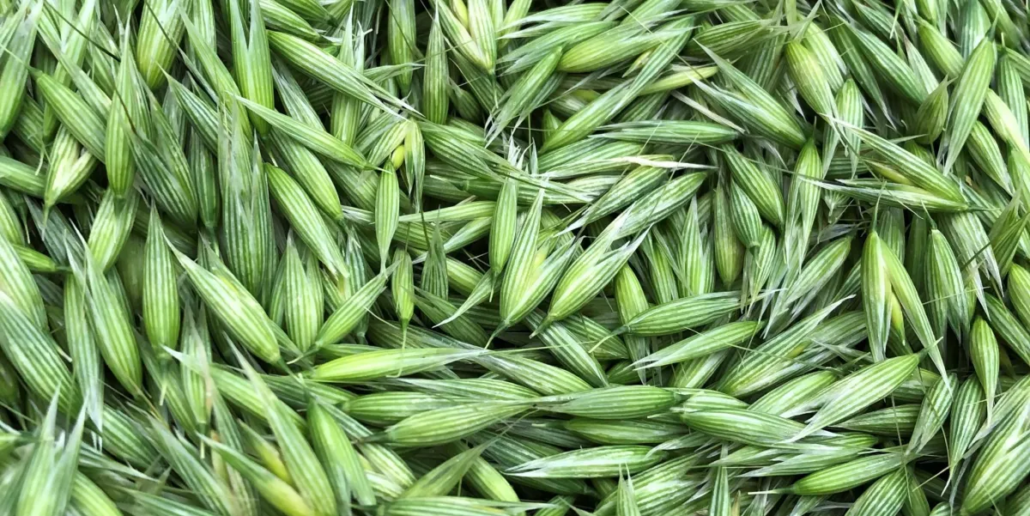
 Milky Oats– a nourishing tonic for the nerves. Milky stage oats are the oats flower/immature seed head, harvested when the bud is full of a milky white sap. The white exudate is best preserved as a fresh plant tincture, which is a tonic and nootropic for the central and peripheral nervous systems. Milky oats is one of those herbs that can do no harm. No drug interactions. And it’s safe for all ages. It’s amazing for everyone and anyone experiencing chronic stress, anxiety, depression, nervous exhaustion or adrenal fatigue. It is a cornerstone of any nervous system formula and pairs well with any of the other nervines listed below.
 Skullcap– skullcap is one of my most used herbs. It is a relaxing nervine, like all of these, but this one is helpful for focus in the face of overwhelm. It is specific for sensory overwhelm, when light and sound feels like it is attacking you, when you feel overstimulated and irritable and need something to drown out the background noise so that you can sleep or focus on your work without distracting thoughts. Skullcap is also antispasmodic. It is indicated for tics, tremors, Tourette’s, restless leg and Parkinson’s. It is also very helpful for hormonal transitions, PMS, menopause and anger/irritability due to hormones or stress. It is a tonic for the nervous system and makes a great digestive bitter.
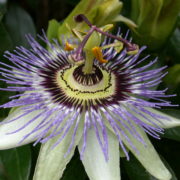 Passionflower– most people use passionflower for sleep. Another relaxing and hypnotic herb with antispasmodic properties, passionflower is helpful for insomnia, anxiety, nervous tics, neuralgia, headaches and spasmodic pain. It is specific for people who can’t fall asleep due to excessive mental chatter, overstimulation during the day, and cyclical or repetitive thoughts. It helps quiet and center the mind. It boosts GABA, which brings sense of calm. It is said to produce sleep that is normal without inducing drowsiness or dullness the following day. It doesn’t work for everyone, but can be especially helpful for people with mild to moderate insomnia who are thin, who are fragile, weak, and exhausted.
 Mimosa– this stunning invasive tree is known in China as the Tree of Collective Happiness, or Collective Happiness Bark. Both flower and bark are used to support the mood; the bark is said to anchor or ground the spirit while the flowers uplift/lighten it. Mimosa is soothing to a troubled heart and mind. Both the flowers and bark are valued for relieving insomnia, anxiety, stress, and depression. Chinese people traditionally recommend its use for anyone who is suffering from grief as a result of a severe loss. It is also indicated for insomnia, anxiety, depression, anger, irritability, bad dreams, phobias, paranoia, sleep disorders, and any kind of emotional distress.
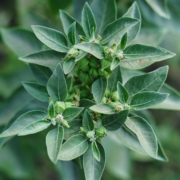 Ashwagandha– this one is an adaptogen (an herb that strengthens the adrenals and balances stress hormones) with whole-body strengthening properties. Ashwagandha nourishes the adrenals, muscles, thyroid, reproductive organs, blood and mind. It is grounding without being sedating, but can be helpful for insomnia in a different, non-sedating way. It does not make you sleepy immediately, but taken over time can improve the quality of sleep. Ashwagandha is helpful for thyroid disorders, low fertility, low libido, chronic stress, fatigue, fibromyalgia, cognitive function, coordination and athletic performance. It’s a tonic that works best with long-term use.
 Saint John’s Wort– Most people think of SJW as an antidepressant, but it is much more than that. It is a nerve tonic with antidepressant, anxiolytic, anti-inflammatory, antiviral and vulnerary properties. It supports the liver’s detoxification, harmonizes the solar plexus and protects one from negative influences/energies, whether those are physical or spiritual pathogens. SJW interacts with a lot of medications and should be avoided internally if you are using prescription drugs, but homeopathic or flower essence use is okay. It also makes a great topical remedy for aches and burns. Read the whole monograph through the link in the name to learn more about its virtues and cautions.
 Kava– a spicy tropical root with anxiolytic, antispasmodic and analgesic properties. Kava has an affinity for the muscles and mucus membranes as well as the root chakra. Kat Maier calls this a root chakra relaxant. It can be very effective for pain in the genito-urinary tract including cystitis, urethritis, interstitial cystitis, uterine spasm, prostatitis, and inflammation of the vas deferens or spasmatic cord. Kava is also effective for fibromyalgia, restless leg syndrome, and insomnia with muscular tension. Most people use kava for full body relaxation, to support anxiety, sleep and chronic tension or occasional spasmodic pain. Read the full monograph for more information about the dosage and contraindications.
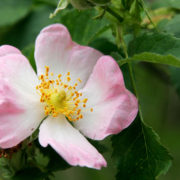 Rose– gently soothing, relaxing and uplifting. Rose is a mild and gentle anxiolytic and antidepressant. It is specifically nourishing to the heart chakra and is a much-loved remedy for heartache and grief, sexual trauma, and lack of self-love. It nourishes both the emotional heart and the physical heart, strengthening the blood vessels and nerves, and helping one to dance the line between boundaries and vulnerability. Herbalist Kiva Rose says that rose treats both intense apathy and intense passion, bringing both emotional extremes into balance. Rose is also wonderful for tension in the liver and reproductive system and can be wonderful for allergies, skin conditions, menstrual cramps, depression & anxiety.

Blue Vervain– a bitter, relaxing nerve tonic. It is also antispasmodic, like skullcap, and can be helpful for spasm, seizure, nervous tics, PMS, menopausal anxiety, irritability, fevers, liver migraines, trigeminal neuralgia, restless leg syndrome, Bell’s Palsey and stress/anxiety accompanied by nervous tension. Specific for people who are “too strong above and too weak below”. It is also specific for type A personalities, for people who are perfectionists, overly critical of themselves and others, whose standards are very high, and who burn themselves out attempting to achieve those standards for themselves. Vervain is very bitter and cooling. Small doses are tonic; large doses can be emetic.
 Lemon Balm– lemon balm is a deliciously calming nervine that children and adults adore. It supports relaxation, mental performance and cognitive function while soothing stress and anxiety. It is appropriate for daytime use, as it is gently relaxing without being sedating and will not induce drowsiness. One of my former students said that lemon balm tea was “a smile in a cup.” It is also neuroprotective and antiviral (as a fresh plant tincture). It is rich in minerals and uplifting terpenes and supportive for mood, cognitive function, digestion and the immune system. Lemon balm is also good for hyperthyroidism.
Other favorites:
Bacopa– reverses depletion of brain derived neurotropic factor, which plays a role in neuroplasticity, inhibits inflammation pathways in the brain. Anti-inflammatory, anxiolytic, neuroprotective, nootropic, antioxidant, thyroid stimulant; increases cerebral blood flow, strengthens memory, reduces anxiety and irritability, prevents Alzheimer’s disease (it inhibits acetylcholinesterase, gets rid of lead-induced oxidative stress) and can be helpful for ADD/ADHD. No drug interactions.
Motherwort– neuroprotective (especially of the mitochondria in the brain), anxiolytic, bitter, cardio tonic. Calms the sympathetic nervous system. Nice for the fried and frazzled, especially when anxiety is accompanied by palpitations and other heart stress (heartache, grief). Also good for nervousness associated with hormonal changes (when emotions feel out of control), for people whose anxiety wears them down into depression. Also great for digestion and liver stagnation.


