
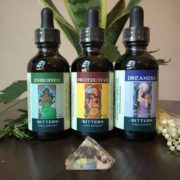
Black Walnut, Bitters & Gut Health pt 1
Bitter is the flavor of summer season and the fire element. It is the taste of lettuce that has bolted, of charred meat or vegetables from the grill, of ashes left by the fire.
Bitter is both a flavor and an action in herbalism. I have written about bitters before. This taste is well loved by herbalists for its myriad effects on digestion and metabolic function. In this post, I expand on some of the therapeutics of the bitter flavor, specifically how bitter-tasting herbs can support the body with two current health trends: GLP-1 and parasites, both of which are connected to our gut.
One bitter-tasting plant, that also happens to be a remedy for some types of parasites, is black walnut. Those of you who live near a black walnut tree are familiar with the large green balls that litter the ground this time of year. They have a very distinct, pungent smell. If you ever dared to taste the hull, you may describe the flavor as bitter, pungent and astringent. This combination of flavors is not the most appetizing, but it is an ideal combination for digestive health.
The bitter flavor, when it meets with the taste receptors on our tongue and throughout our GI tract, triggers what is known as the bitter reflex, which sends cascade of digestive secretion through the GI tract, increasing the release of saliva, stomach acid, digestive enzymes and bile. The overall effect is improved digestion and assimilation of nutrients, blood sugar balance, restoration of gut tissue, reduction of food allergies & inflammatory conditions, as well as reduction of gas, bloating, constipation and other signs of weak digestion.
We need ample digestive secretions (saliva, hydrochloric acid, pancreatic enzymes, bile) to effectively digest (break down) our food into small enough molecules that we can assimilate them into our bloodstream further on in our intestines. Strong upper GI function (stomach and upper portion of the small intestine) is essential for good gut health, to ensure that food is well broken down by the time it reaches the part of our system where it is ready to be absorbed. If it is not broken down well enough, the bacteria in our guts will break it down for us, often creating a lot of gas and bloating in the process. Strong upper GI function is essential for the assimilation of minerals. Minerals like Calcium need to be in the presence of an acid to be assimilated, and deficient stomach acid leads to deficient calcium assimilation. Stomach acid is also the first line of defense against food and water borne pathogens/parasites. If your stomach acid is deficient, and you consume a food containing higher levels of salmonella, E. coli, H. pylori, or the eggs of intestinal worms, your chances of those critters surviving and colonizing your system is greatly increased.
Obviously, we can have too much of a good thing, and sometimes stimulating hydrochloric acid production is not helpful if there is already a sufficient supply, but the vast majority of us are suffering from hypo-secretion or too little acid production. Why? Because we are chronically stressed, and stress shuts down digestion. Maybe because we are dehydrated, or deficient in chloride or sodium. Or maybe it’s because our interstitial fluids are too acidic because our mitochondria aren’t functioning properly because we are deficient in the minerals required for the Krebs cycle to generate enough energy and hydrogen ions to create good stomach acid (this can become a vicious cycle), and/or because cortisol is chronically elevated, which suppresses sodium levels, a necessary electrolyte for buffering the loss of chloride ions are pulled out of the blood to make hydrochloric acid (again, stress). We know that stress, toxins, and poor electrolyte balance are huge factors in sluggish digestive and metabolic function, but what you might not know is that deficient stomach acid is usually the cause of heartburn. This is counterintuitive, and modern medicine does not differentiate between hyper and hyposecretion; it just treats it all the same as if too much stomach acid is always at the root. Yet, considering our stress-filled lifestyles and nutrient-depleted foods, it’s actually somewhat rare that someone is hyper-secreting. There is a simple way to test this at home: eat something sour/acidic and see if your symptoms improve. You can take 1 TBSP of fresh squeezed lemon juice or apple cider vinegar, mix it with 2 TBSP of water, and drink that immediately after eating or when you start to feel symptoms of heartburn. If your indigestion feels better, you need more acid. If it aggravates it, then drink some milk or take some marshmallow root powder/tea to coat the mucosa and relieve the irritation.
I’m sorry for the longer-than-usual rant but given the preponderance of antacid medications and the rise of osteoporosis, mineral deficiencies, poor assimilation, leaky gut, parasites, bloating and other intestinal issues, I need to stress the importance of stomach acid and its role in supporting digestion, mineral absorption, preventing pathogens and parasites, and reducing gas/bloating and other digestive issues further on downstream. The same is true of all of the secretions of the upper GI and a deficiency in any of them can lead to fermentation, gas and bloating, poor assimilation, leaky gut, constipation, and a myriad of other digestive and metabolic issues. Sluggish digestion can lead to autotoxicity, or the absorption of toxins from the gut that ordinarily would not make it into our bloodstream if our digestive system was working optimally. If we have leaky gut, small intestine bacterial overgrowth, or chronic constipation, undigested foods, bacteria and their byproducts and other that should be eliminated can get absorbed, leading to brain fog, fatigue and joint pain.
This is where bitters come in. The bitter taste stimulates the release of ALL of our digestive juices as well as hormones like GLP-1 (yes, this is a hormone that our bodies make naturally). That’s because we have evolved with the bitter flavor our bodies have learned that bitterness can be associated with toxicity and responds by stimulating digestion and detoxification via the liver and bowels to help neutralize any potential toxic effects. This doesn’t mean that all bitter tasting things are toxic, but often toxic things do have a bitter taste. There are many kinds of bitter-tasting compounds that plants produce, including terpenes, alkaloids, iridoids, tannins and phenolic compounds. These are all secondary metabolites, meaning that they do not directly nourish the plant (or us), but rather are produced by the plant for protective functions like deterring predators or protecting against UV radiation. In our bodies, these compounds offer a similar protective quality, and regular use tends to fortify not only digestion, but our entire metabolic system. Bitters are categorically detoxifying, moving, toning, and relaxing. And we only need a little bit to trigger the bitter reflex to improve digestion.
You may need to take more than just a few drops to stimulate our endogenous GLP-1 (glucagon-like peptide-1), however. This is based on new research from New Zealand that shows a positive effect in satiety and appetite control with a bitter extract from Hops (see references below; and thank you to Guido Mase for sharing this research with the community in a recent webinar). This research supports what herbalists have known for a long time: that bitters are able to control appetite, balance blood sugar and support weight loss over time, but it is exciting to learn that something so simple can measurably demonstrate a 6x increase in plasma GLP-1 and other hormones such as polypeptide Y and cholecystokinin. AND because bitters are supporting endogenous production of these hormones, you don’t have the rebound effect that occurs when you discontinue a medication or supplement. Bitters can actually help people transitioning off of these medications, to reduce their chances of rebounding when they discontinue taking them.
So bitter-tasting herbs in general support nearly all aspects of digestion. Bitter-tasting herbs support the liver and kickstart immune and detoxification pathways (just in case we ingested something poisonous). And they can help with blood sugar, weight loss and metabolism. One final thing that bitters do is improve the health of our microbiome. This is in part because of their ability to strengthen digestion and help us more effectively break down our food so that it doesn’t become fodder for the bacteria downstream. Another reason is that bitters indue antimicrobial compounds from mucosal cells. The beneficial bacteria in our gut is immune to these compounds that are produced within our gut lining, but the “harmful” bacteria in our gut is not, so these compounds help keep their populations in check. It turns out that this is a two-way street: the bitter taste stimulates our mucosal cells to release antimicrobial compounds that protect us against potentially pathogenic organisms, and the beneficial bacteria inhabiting our gut produce short-chain fatty acids that are bitter in taste, which in turn activate intestinal bitter taste receptors. The effect is reduced gut inflammation, reduced mucosal damage and reduced pathogenic flora. All of this is achieved through tasting a flavor that is has been bred out of our diets!
Many cultures still enjoy a bitter liqueur/amaro, a shot or espresso, a bitter salad or dark chocolate after a meal. It is a traditional part of European culture because it helps us to better digest and assimilate our meal, helps us to feel more satisfied, and signals to our brain to slow down, that we are done with our meal.
Black Walnut is bitter. Many people know black walnut as an anti-parasitic plant that helps expel intestinal worms. I was going to share about black walnut, but this article has turned out to be lengthier than I was anticipating, so I will save black walnut for part 2.
To be continued….
In the meantime, join me for a 3–4-week experiment of using bitters every day through the remainder of August. I would LOVE to hear about your experience. Please comment below or email us a summary of your experience to tonicherbshop@gmail.com. To participate, you need only commit to one dose per day, although 3 doses would be idea. It’s best to use bitters with meals (5 minutes prior to or after consuming your lunch or dinner). You can use liquid tincture or drink a bitter tasting tea or liqueur. 1/2 tsp of liquid tincture, 1 oz of an amaro, or 2 oz of a bitter tea will do. You can also experiment with bitter greens like endive, radicchio or dandelion greens. Keep a simple journal to document your experience. Do you notice any changes to your digestion? elimination? mood? sleep? energy? appetite?
If you don’t have any bitters on hand, stop in to pick up one of Tonic’s house-made bitters tinctures, or any number of bitter-tasting herbs.
An Incomplete List of Bitter Herbs: agrimony, andrographis, angelica, artichoke leaf, barberry root, bitter orange, black walnut, blue vervain, boneset, bupleurum, calendula, CA poppy, dandelion, fenugreek, feverfew, fringe tree, gentian, goldenrod, goldenseal, hops, horehound, milk thistle, motherwort, mugwort, oak, olive leaf, oregon grape root, skullcap, sweet annie, wild lettuce, willow, wormwood, yarrow, yellow dock.
What’s your favorite bitter?
References
- Walker, E., et al. (2019). https://doi.org/10.3390/nu11112754
- Walker, E., et al. (2022). https://doi.org/10.1093/ajcn/nqab418
- Walker, E., et al. (2024). https://doi.org/10.1016/j.obpill.2024.100117