
Black Walnut, Bitters & Gut Health Part 2
Last month I started writing about black walnut, which turned into a longer-than-expected article on bitters. This month we will circle back to Black Walnut! I’m guessing most of you from the mid-Atlantic are very familiar with black walnut trees. They are common around here and are notorious for dropping their dense, racquetball-sized nuts all over people’s yards. They’re also known for inhibiting the growth of certain plants through the release of allelopathic chemicals from their roots, including Juglone. Many people curse these trees because they can’t grow tomatoes nearby or because they’ve twisted an ankle on one of the fallen nuts littering their yard. But those who are hip to wildcrafting will harvest the nuts of walnut to make ink, dyes, liqueurs and medicine. Its wood is also dense and makes good materials for cabinets, bowls, instruments and furniture. Medicinally, black walnut is most famous as an anti-parasitic herb. It has been used for centuries to help expel worms and intestinal parasites. It also has historical use for digestive complaints, skin conditions, and wound care with antiseptic and antifungal properties.
Read on to learn more about black walnut’s many traditional medicinal uses, along with a closer look at parasites, the current enthusiasm for parasite cleanses, and why foundational digestive health matters so much.
BOTANICAL NAME: Juglans nigra
COMMON NAMES: Eastern Black Walnut,
FAMILY: Juglandaceae
PARTS USED: Hull (either green or aged to black), leaf, bark
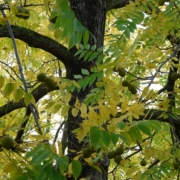
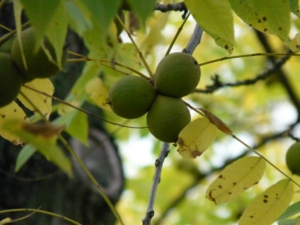
BOTANICAL DESCRIPTION: Large native deciduous tree that can grow to a height of 80-125 ft and has a straight trunk with dark bark deeply furrowed in a diamond-like pattern. Its leaves are large, pinnately compound with toothed edges, when crushed have a distinctive smell, and turn yellow in the fall. The catkin flowers emerge with leaves in the spring, and the 2-inch fruits fall with the leaves in the fall. The fruit has a rough green husk that ages to mushy brown, containing the single brain-shaped nut within a hard furrowed shell.
ACTIONS AND PROPERTIES: Alterative, antiseptic, aperient, diaphoretic, antioxidant, anti-helminthic, antiparasitic, antifungal, anti-tumor, astringent
INDICATIONS: all parts of black walnut are good for wound healing, diarrhea and constipation. It has a strong influence on the GI tract and is a gentle laxative that is moderately slow, but reliable (both leaves and bark). At the same time its astringency and antiseptic properties make it suitable for treating sub-acute diarrhea. Its tightening and toning effect can be helpful in preventing the uptake of toxins from constipated bowels (i.e., autointoxication, toxemia, leaky gut syndrome, dysbiosis) and it can also treat malabsorption due to a closed gut, according to Phyllis Light. “She says it helps the assimilation of nutrients, especially fats and proteins” (Matt Wood, Earthwise Herbal, New World, p. 208).
The husk and brown skin covering the inner kernel or nut when it is green or unripe have powerful antiseptic, germicide, vermicide, and anti-parasitic properties. No insect will touch the leaves or husks of the walnut tree. The brown stain, found principally in the green husk, contains organic iodine, which is antiseptic and healing.
As an antiseptic and antifungal, black walnut can be helpful for
- ringworm (topically)
- candida
- sore throats (as a spray or gargle)
- ulcers
- wound healing (topically)
Black Walnut is an astringent tonic that can be helpful for relaxed and atonic conditions including :
- ulcerations (both internal and external)
- canker sores, mouth sores (as a mouth rinse)
- sore throats, tonsillitis, hoarseness (as a gargle)
- diarrhea
- dysentery
- ballooned intestines (toning)
- bleeding hemorrhoids (all parts are toning)
- prolapse (toning)
- chronic postnasal drip (it is drying/astringent, antiseptic and anti fungal. Many chronic sinus infections have a fungal component)
As an alterative (herb that supports natural detoxification) black walnut is useful for various skin eruptions (alteratives in general are indicated in chronic skin diseases as well as joint pain, connective tissue disorders, fibromyalgia, constipation, hypothyroid and cancer). Black Walnut is indicated for chronic skin conditions, especially those associated with toxicity and/or those associated with poor digestion/assimilation including
- eczema
- acne
- abscesses
- boils
- ulcerations of the skin and wounds that won’t heal
The green husk of the unripe kernel contains potassium iodide, a recognized remedy for scrofula, syphilis, and other forms of ‘bad blood’ and contributes to walnut’s alterative and thyroid-strengthening properties. ‘Bad blood’ is a folk phrase that is actually referring more to the interstitial fluid than to blood. It is associated with a heavy toxic load, sluggish metabolism, poor circulation and poor lymphatic drainage. Conditions associated with bad blood include:
- hypothyroidism (iodine is an important nutrient for thyroid function)
- constipation
- fibromyalgia
- joint pain
- chronic skin conditions
- cancer
Black walnut is said to purify the blood (interstitial fluids), supporting cellular communication, improving oxygenation, nutrient delivery, and waste removal from the extracellular matrix. Juglone also inhibits tumor proliferation, induces apoptosis and blocks metastasis of cancer cells (in vitro). In preclinical laboratory findings, black walnut has been shown to be effective against tumors of the colon, pancreas, breast, prostate, and brain.
And as an anthelmintic, black walnut can be effective in expelling worms, including tapeworms. The unripe nuts themselves are anthelmintic in action. The iodine content and the juglone content contribute to its antimicrobial/antiparasitic action. Juglone reduces parasite load and modulates immune responses. Walnut can also clear candida overgrowth and protozoa infections like Giardia.
PARASITES
There’s a lot of hype about parasites these days, no doubt driven by the AI enhanced images circulating on social media. I don’t want to dismiss the idea of parasites. Parasites are real. But do I believe that most people with gas and bloating or have a 5 foot long tapeworms, that worms are to blame for a young boy’s dark circles under his eyes, or that hookworms are the cure for asthma? No, I don’t. I can see how any kind of chronic infection could contribute to dark under eye circles (which is a sign of chronic exhaustion/adrenal depletion). I can understand how helminthic therapy can suppress certain aspects of the immune system thereby reducing allergic responses or asthma, but I don’t think that all of our chronic illness, immune and nervous system dysregulation, and deep fatigue are all curable by doing a parasite cleanse. I distrust social media stories that end in trying to sell you on a product, or any marketing campaign that generates sales by fear-mongering. As a rule, I don’t believe anyone spreading fear (they are the true parasites!). And I don’t think it is wise for us to go down the rabbit hole of parasites at the expense of building foundational health! Not everyone is strong enough for a parasite cleanse. For many, it is too depleting to an already depleted body. For many, a cleanse may make them feel better temporarily, but if they continue to eat poorly, or frequently use antibiotics, or fail to address underlying food allergies/sensitivities, they will be back to feeling just as crappy in a few weeks. Creating a strong microbiome, supporting strong digestion from the mouth all the way down is absolutely essential to helping anyone feel vibrant and strong.
What is a parasite, anyway?
Parasites are anything that live on or inside of a host organism, that feed on that host and that can cause harm to the host. This includes many types of organisms such as protozoa, mites, insects and worms. So parasites can include things like lice, bed bugs, mosquitos, malaria-causing Plasmodium. Babies could fit into the definition of parasites! They deplete the nutrients and vital energy from their mother! But when most people talk about parasites, I think that they are thinking about intestinal worms like pinworms, hookworms, and tapeworms, and protozoa like Giardia. For this article we will focus on these kinds of intestinal parasites, which can cause cramping, bloating, diarrhea and lead to malabsorption and malnutrition.
Signs of parasites:
- chronic bloating or gas after meals (a sign of fermentation, often related to insufficient gastric secretion/weak digestion)
- pain can be a symptom because they create inflammation
- cramping, IBS symptoms
- diarrhea
- strong food cravings, especially for sugar (often a sign of a yeast overgrowth)
- brain fog and chronic fatigue (this can be a symptom of various infections like Lyme, candida or mono, not just intestinal parasites; can also be rooted in hypothyroid, mold exposure, anemia, and more)
- rapid weight loss despite eating adequate quantities of food (can also be a sign of hyperthyroidism)
- malabsorption, nutritional deficiencies due to not assimilating your nutrients
- anemia (can also be due to poor diet, lack of B12, enteritis, colitis, and inflammatory gut disorders, autoimmune conditions, or lack of intrinsic factor)
- skin rashes or hives (can be the result of many things as well, allergens, toxins, etc.)
- grinding teeth while you sleep (this one is more classically associated with parasites and calcium deficiencies)
- anal itching (characteristic of pinworms, the most common parasitic worm in North America)
- mood swings (can also be due to nutritional deficiencies, toxins like mold, hormonal transitions, stress, life in general)
- nausea or vomiting
- passing a worm in your stool (clear, irrefutable evidence)
Prevention
Anyone can pick up one of these bugs from ingesting contaminated food or water or touching a contaminated object/surface and then touching food or their mouth. Many travel the fecal-oral route, and some can also come from undercooked meat/seafood. Some can get into your body through your skin, but those are rare in this country. Hygiene is the best prevention, especially washing your hands before eating, and after using the bathroom.
- Wash your hands before eating, and after using the bathroom or handling livestock
- Drink purified water
- Use sanitary methods for disposing of human waste
- Use sanitary methods for food preparation
- When traveling to tropical or subtropical regions, be mindful of food and water safety. Avoid undercooked meat and seafood, drink properly treated water, and be cautious with raw fruits and vegetables that may have been washed in contaminated water. A good rule of thumb is: if you can’t peel it yourself, don’t eat it!
- Use bitters to increase stomach acid before meals when traveling (wormwood)
Hydrochloric acid is the first line of defense against food and water-borne pathogens, as I mentioned in the previous article on bitters. Using bitters before eating to stimulate stomach acid secretion can reduce the chances of unwanted organisms surviving the stomach and passing on to the intestines. Wormwood is a bitter that is also antimicrobial and anti-parasitic- I always bring wormwood tincture with me when I’m traveling!
And strengthening your microbiome is so important for both prevention and treatment of parasites. When our commensals, or beneficial bacteria, are healthy and in balance, they prevent pathogenic organisms from taking root. They do this by literally taking up space so that there is no available real estate for pathogens. They also do this by producing compounds that inhibit other species. Pathogens, whether intestinal parasites, viruses, bacteria, or yeast/fungi, tend to attack/settle into weakened tissue. Just like invasive plants, they only take root in areas that have been disturbed, where there is an open niche. A healthy ecosystem, like an old-growth forest, is more resistant to invasion because its ecological niches are already occupied by established organisms. The same is true for our internal ecosystem. A healthy microbiome is the best prevention. How to maintain a healthy microbiome is another huge topic which is beyond the scope of this article. In a nutshell, you can support beneficial intestinal flora by
- eating fiber every day (fruits, vegetables, nuts, seeds, whole grains, legumes, mushrooms!)
- eating fermented foods rich in probiotics every day (sauerkraut, kimchi, kvass, yogurt, kombucha, kefir)
- avoiding things that kill the beneficial microbes (chlorinated water, preservatives, antibiotics, pesticides/herbicides)
- avoiding sugar and simple carbohydrates that feed the unwanted organisms (the good ones prefer complex fiber over simple sugars)
- supplementing with probiotics as needed (especially following a round of antibiotics)
CONCLUSION:
If you suspect that you have parasites, it’s worth investigating. Herbs like black walnut and wormwood could be appropriate. In combination, wormwood, black walnut and clove can be helpful for a variety of organisms, but different parasites require different approaches. Testing is an important first step. Depending on the suspected organism, diagnosis may involve stool samples, blood tests, or, in the case of pinworms, the tape test.
Do consider parasites if you are experiencing anal itching, persistent digestive symptoms, particularly diarrhea, frequent cramping, unexplained weight loss, or signs of malabsorption, but do not automatically assume that your anemia, fatigue, brain fog, or bloating are due to parasites because there are many contributing factors, including food intolerances, nutritional deficiencies, stress, hormonal changes, thyroid imbalance, and other infections (i.e. Lyme or mono)
I do believe that parasites are a concern, and I also want to acknowledge that there is A LOT of hype out there and I don’t think that one should overlook the foundations of good health because of a Facebook post saying that a parasite cleanse is going to fix all of your family’s health problems. A one-time cleanse is not going to resolve the consequences of consistently eating a highly processed diet, consuming alcohol excessively, smoking cigarettes, neglecting sleep, or living with chronic stress. And for someone who is already depleted by illness or malnutrition, an aggressive cleansing protocol may do more harm than good.
Eating a balanced, whole-food diet, getting adequate sleep, consuming sufficient minerals, drinking clean water, breathing fresh air, exercising regularly, and supporting healthy digestion should always be priorities. Gut health is a big part of foundational health, and it requires nourishment and building, not just cleansing and purging.
Black Walnut can be supportive for digestive health beyond parasites. Its bitter and astringent properties have made it a valuable remedy for many digestive complaints, including diarrhea, constipation, malabsorption, insufficient secretion, ulcers and candida. It is not a tonic herb, but it is not harmful if used within therapeutic doses. Smaller doses may be helpful as a digestive bitter. Larger doses may be appropriate for parasites or acute diarrhea. With any herb, the preparation, dose, intended use and individual constitution matter.
So, do use bitters to support digestive function. Do take care of your microbiome by eating plenty of fiber and incorporating fermented foods. And do consider the whole picture before judging yourself as ‘dirty’ or ‘contaminated’ or something that needs to be cleansed.
Another long article, but I hope that this level of detail is helpful. In a world of taglines and superficial, regurgitated infographics, I really want to bring nuanced and grounded information to y’all!
Yours in health,
Ashley
*This article is for educational purposes only. The information presented here is not meant to prevent, treat, diagnose or cure any disease*
REFERENCES:
- The Earthwise Herbal, Matthew Wood
- Rx List – Walnut (Juglans nigra) profile
- Flower Power, Anne McIntyre
- The Modern Herbal Dispensatory, Thomas Easley & Steven Thorne
- Herbal Medic, Sam Coffman
- hps://educaon.mdc.mo.gov/discover-nature/field-guide/black-walnut Sibley, David Allen. The Sibley Guide to Trees, Knopf, 2009
- Jahanban-Esfahlan, Ali, et al. “A Comprehensive Review on the Chemical Constituents and Functional Uses of Walnut (Juglans Spp.) Husk.” International Journal of Molecular Sciences, vol. 20, no. 16, 12 Aug. 2019, p. 3920
- www.ncbi.nlm.nih.gov/pmc/arcles/PMC6719079/#:~:text=The%20chemical%20composion% 20of%20walnut, 10.3390/ijms20163920
- Milind, Parle, and Khanna Deepa. “Walnut: Not a Hard Nut to Crack.” International Research Journal of Pharmacy, vol. 2, no. 5, 5 Feb. 2011
- Hutchens, Alma R. Indian Herbalogy of North America. Shambhala. Boston. 1991. p.64.
- Mills S, Bone K. Principles and Practice of Phytotherapy: Modern Herbal Medicine. Churchill Livingstone, 2000. p. 148, 179, 180, 254
- Cook, WM. The Physio-Medical Dispensatory: a Treatise on Therapeutics, Materia Medica and Pharmacy… Eclectic Medical Publications, Sandy, OR 1985 p. 488- 91
- Ellingwood, F. American Materia Medica, Therapeutic and Pharmacognosy. Ellingwood’s Therapeutist, 1919 p. 328